
John M. | Red Phoenix correspondent | Colorado–
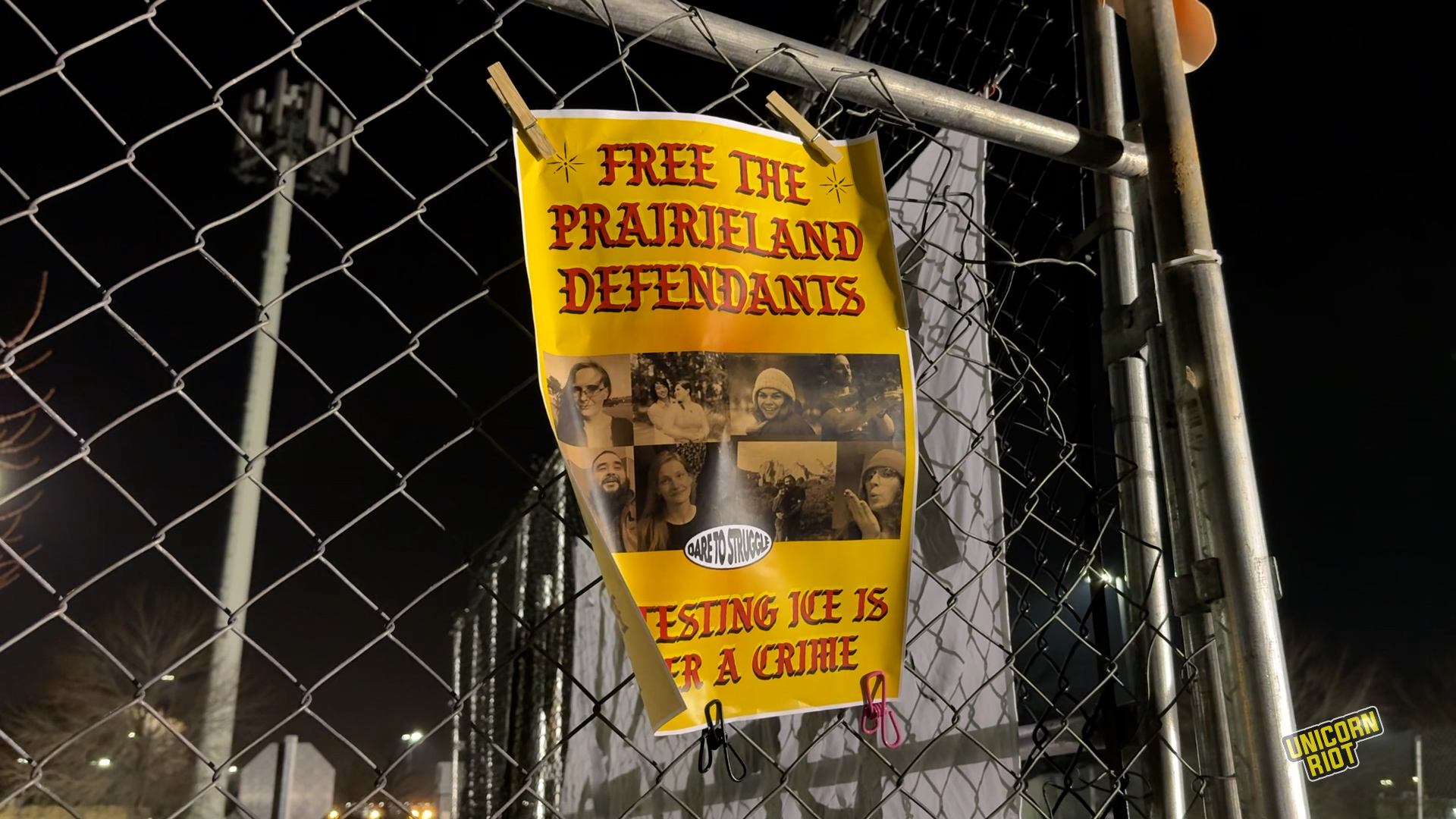
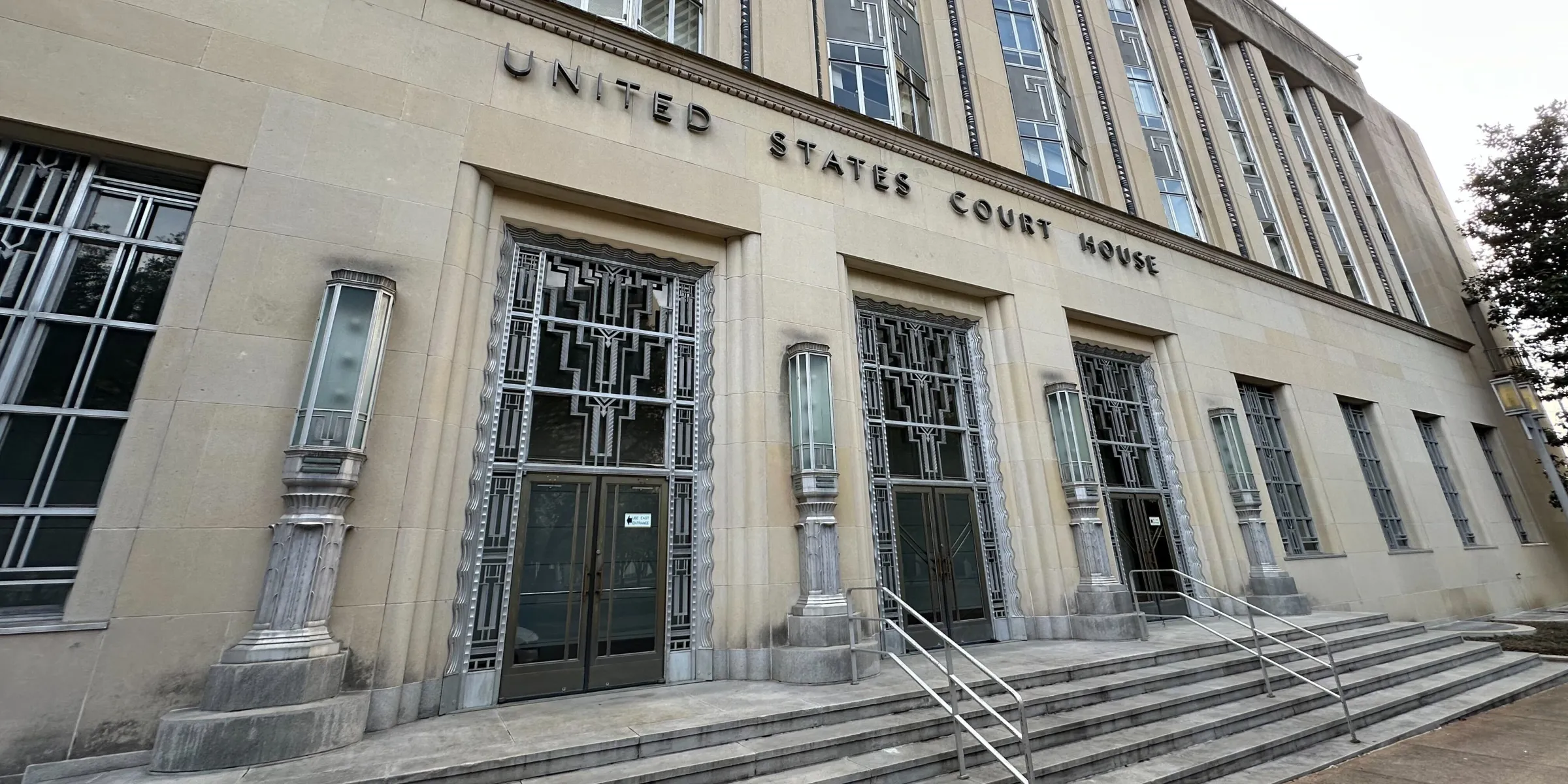
In a federal courtroom in Fort Worth, Texas, nine individuals associated with local leftist organizing efforts face serious charges following a protest outside an ICE detention facility. Eight of them have been charged with material support for terrorism, in part because they wore black clothing during the demonstration. One defendant faces additional obstruction charges related to moving printed materials after an arrest. Prosecutors have introduced as evidence radical pamphlets, memes, and social media posts critical of law enforcement and immigration enforcement. The case has drawn attention as one of the first federal terrorism prosecutions explicitly targeting leftist protest tactics under the current administration.
This prosecution reveals the fundamental character of social relations in the capitalist state. The Prairieland Detention Center is not a neutral administrative facility: it functions as an instrument for managing and disciplining a highly-vulnerable layer of the working class: undocumented migrant laborers who perform essential, but low-wage, and thus highly exploitative work in agriculture, construction, services, and logistics. By maintaining a pool of workers with even more limited rights in worker protections, collective bargaining and civil liberties, ICE helps sustain downward pressure on wages and working conditions across entire sectors of the economy. Protests against such facilities represent an attempt by segments of the working class to challenge this mechanism of exploitation and division.
The decision to treat black clothing as potential “material support for terrorism” and to criminalize collective anonymity is particularly instructive. Under capitalism, legal protections for speech, assembly, and protest exist within strict limits. These rights are extended primarily to the extent that they do not fundamentally threaten the existing property relations of private ownership or the state’s capacity to maintain order and worsening exploitation on behalf of the owning class. When working-class activity shifts from symbolic expression toward more organized disruption of repressive institutions and policies the boundaries of acceptable dissent narrow rapidly. The state apparatus, which Marx and Lenin described as an instrument of class rule, responds by reclassifying such activity as a security threat.
This approach produces concrete harms for the broader working class in several ways.
First, it discourages political organization among workers. By equating participation in militant protest tactics or the possession of critical literature with support for terrorism, the prosecution raises the personal risks associated with any form of independent, working-class activity. Warehouse workers, delivery drivers, service employees, and others attempting to build collective power face a climate in which even reading materials or group expressions of discontent can be introduced as evidence in criminal proceedings. This fosters isolation and reduces the capacity for sustained organization.
Second, it exacerbates divisions within the working class. Migrant workers detained in facilities like Prairieland are themselves members of the proletariat, displaced by the same global economic pressures generated by capitalist competition and imperialist policies. Criminalizing solidarity actions against their detention encourages native-born workers to view immigrants as threats rather than as fellow workers facing intensified exploitation. The resulting fragmentation weakens the overall bargaining power and political cohesion of the laboring class.
Third, the case illustrates the conditional nature of bourgeois democratic rights. The First Amendment is frequently invoked in liberal commentary as a universal safeguard. In practice, however, these rights were established by and for a propertied class and have always operated within the framework of preserving capitalist social relations. When economic crises intensify and the ruling class requires greater control over labor, the interpretation and enforcement of these rights shift accordingly. What is defended as protected speech during periods of relative stability can be reframed as dangerous incitement when the stability of the system is perceived to be at risk.
Liberal observers express concern that this prosecution represents an “overreach” that threatens democratic norms. Yet the underlying issue is not a deviation from accepted political norms, but their consistent application in defense of class interests. The capitalist state does not exist to guarantee absolute freedoms for the masses; it exists to secure the conditions for capital accumulation, including the segmentation and control of the workforce, and the selective application of political “norms” to protect those goals at all costs and stigmatize workers who “get carried away” in criticizing the system publicly.
The defendants’ activities (operating a book club, running a small printing operation, and organizing protests) reflect attempts at political education and agitation within working-class milieus. The state’s response demonstrates how even modest efforts at independent organization outside the straitjacket of the tightly-controlled and choreographed electoral system are monitored and, when deemed necessary, repressed through expanded legal categories such as “terrorism.”
A genuine resolution to these contradictions cannot be found within the existing legal framework. Juries operating under capitalist institutions are not positioned to deliver outcomes that fundamentally challenge the system’s repressive mechanisms. Lasting protection for working-class political activity requires the transformation of the state itself: replacing the dictatorship of the bourgeoisie with a form of class rule oriented toward the interests of the laboring majority. In such a system, institutions like ICE would lose their function as tools for dividing workers, and political expression would no longer be subordinated to the requirements of capital.
The Fort Worth case is not an isolated incident but a clear expression of how the capitalist state defends its core functions during periods of heightened social tension. It underscores that bourgeois freedoms, while presented as universal, were never designed to accommodate the full development of independent working-class power. Understanding this class dynamic is essential for any serious analysis of contemporary American society.
Categories: Discrimination, Law, U.S. News
 The Red Phoenix