
The iBOT should be remembered as another example of how capitalism doesn’t drive innovation, but has become a destructive force to the development of humanity.
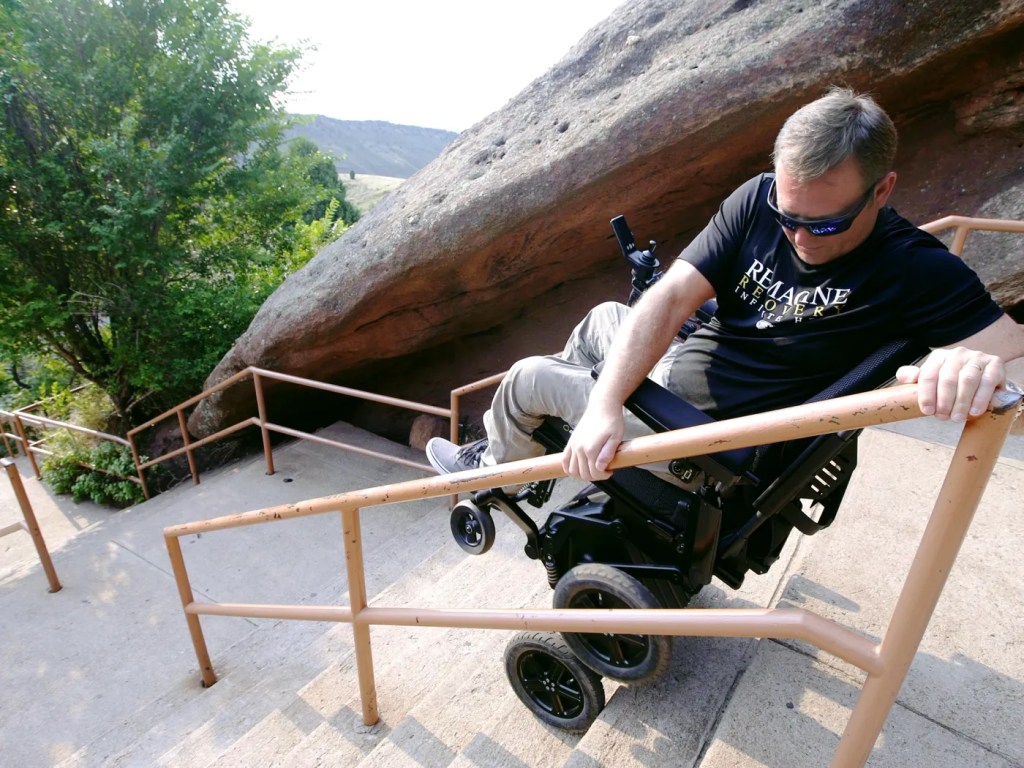
The Museum of Failure, an exhibit featuring failed consumer products from around the world, has a startling exhibit on the iBOT wheelchair. Conceived by inventor Dean Kamen, the iBOT (no relation to Apple products) was hailed as a technological marvel: it could climb stairs, traverse uneven terrain, and even stand upright, which gave users increased mobility and independence, embodying the pinnacle of human ingenuity at the time.
Currently however, the iBOT wheelchair sits in the museum, right next to infamous failed ventures like Pets.com, the Ford Edsel, the Segway, and New Coke. What explains this apparent fall from grace? The QR code plaque accompanying the exhibit reads as follows:
With advanced gyroscopes and sensors, the iBOT offered users a wider range of freedom and movement compared to traditional motorized wheelchairs. The iBOT could climb up stairs, easily maneuver uneven terrain, and lift its owner to a standing height. Expectations were high: ‘This is not a wheelchair. This is an extraordinary machine that will liberate millions of people.’

Developed in the early 1990s by DEKA Research and funded by the Defense Advanced Research Projects Agency (DARPA), with the goal of creating a “wheelchair that walks,” the device was unveiled to great fanfare in 1999. In 2003, it was commercially released under the name iBOT 3000. It was considered a beacon of progress, a symbol of the potential for new tech to improve the lives of millions of people.
The exhibit notes, however, that the iBOT was discontinued after only six years on the market. The reasons given are unexpectedly candid:
“After reading some of the other stories in this museum, you might assume it failed to deliver what it promised or it threw a few too many users down some stairs, but in the end the iBOT failed due to high costs. Insurance companies and national insurance programs refused to cover the cost of £18,000 (about $25,000 USD) per machine. Although the manufacturer did everything they could to lower prices, the technology remained prohibitively expensive.”
In other words, the iBOT wheelchair should have been revolutionary for disabled people but failed, not due to any inherent flaws in the chair itself, but due to capitalism’s gearing of production towards profit and not human need. The problem wasn’t the invention, but the fact that private insurance companies simply didn’t want to pay to provide the chair to patients, and the cost was inaccessible to most working class individuals who couldn’t afford it out of pocket.
The iBOT wheelchair was discontinued in 2009. Johnson & Johnson reported that only 500 units were sold over the course of seven years, though the units that were sold met with universal praise and delivered over 10 million hours of operating time.
It’s worth noting that even the liberal demand of “Medicare for all” would not solve the problems posed by innovations like the iBOT; only socialized and universal healthcare will. Federal programs took a similar attitude towards the device as private industry:
“The FDA classified the chair as a Class III medical device—a higher-risk category that includes pacemakers—instead of as a Class II device, which is the rating for most power wheelchairs. The difference is significant: Medicare and Medicaid might be willing to cover the cost of the iBOT as a Class II device—and most insurance programs take the lead of Medicare and Medicaid when it comes to their coverage.”
In effect, countless individuals have been barred from accessing this life-changing technology. In 2016, a new version of the chair was developed by Mobius Mobility. The new iBOT PMD (personal mobility device) is more affordable than the original model, but it is still expensive and the manufacturer only provides a limited five-year warranty. Mobius is working to secure insurance coverage for the new wheelchair, which is still not widely available. The Museum concludes that the iBOT should be remembered as a sign that thriftiness matters:
The story of the iBOT reminds us that the bottom line is always an issue, even with the most useful innovations.
Instead, perhaps the iBOT should be remembered as another example of how capitalism doesn’t drive innovation, but has become a destructive force to the development of humanity.
Categories: Health Care, U.S. News
 Registered nurse provides insight into local hospital collaboration with I.C.E.
  Denver STAR program provides five years of safer streets, stronger communities
  Cancer, capitalism, and corporate farms in Iowa
  Disaster averted, life-saving asbestos ban upheld
  The Red Phoenix
