
By Benjamin J. Rizzo, Red Phoenix correspondent, Florida.
“As long as women or men live under the pressure of unemployment, as long as the level of wages is not sufficient for a family, as long as housing conditions are unfavorable, and as long as the state does not make motherhood easier for every woman in various ways and does not provide social services for mother and child, it is clear that the women must stand up for free abortions.”
Alexandra Kollontai
Two proposed amendments to Florida’s Constitution would, if approved by voters in 2024, increase worker autonomy in the Sunshine State by adding the right to abortion and the right to use marijuana recreationally to that document.
The abortion measure, entitled “Amendment to Limit Government Interference with Abortion” is sponsored by Floridians Protecting Freedom, a coalition of several groups, including the ACLU of Florida, Planned Parenthood, and 1199 SEIU (Service Employees International Union–United Healthcare Workers East).
It reads: “No law shall prohibit, penalize, delay, or restrict abortion before viability or when necessary to protect the patient’s health, as determined by the patient’s healthcare provider. This amendment does not change the Legislature’s constitutional authority to require notification to a parent or guardian before a minor has an abortion.” While this measure is worthy of support, the second provision is problematic. It seems that the drafters were unconcerned that some minors may have valid reasons for not informing their parents or guardian that they’re pregnant. Although under Florida law, a pregnant minor who needs an abortion can request a hearing before a judge if the minor can’t get or won’t seek parental approval obtaining a lawyer and accessing this process can be difficult.
In August, Floridians Protecting Freedom announced that it had collected more than 600,000 of the signatures (892,000–8% of the votes cast for president in Florida’s 2020 election) required to place the measure on the 2024 ballot. Axios Tampa Bay reported this month that almost 300,000 of those signatures had been verified–more than the 25% of signatures required to trigger a mandatory review of the measure’s text by the Florida Supreme Court, which will look at whether the text covers only a single subject, the accuracy of its title and summary, and if it violates the U.S. Constitution. This review will determine whether the abortion and marijuana amendments make it to the ballot. If they do, a supermajority–at least 60%–will be required for passage.
Five of the seven members of the Florida Supreme Court are conservatives appointed by Gov. Ron DeSantis since 2019 so there’s no guarantee that the court, no matter how well-drafted the amendments may be, will allow them on the ballot.
In 2021, the Florida Supreme Court nixed a marijuana legalization amendment, claiming that it was “misleading” based on its use of the word “permit.”
In other abortion-related news from Florida, the state’s Supreme Court held a hearing on Sep. 8 to determine the constitutionality of a 2022 law that bans abortion after 15 weeks. The court “seemed open to arguments to uphold” the measure, noted the Guardian. If the court lets it go into effect, a ban on abortion after 6 weeks, passed in the spring of 2023, also would go into effect. This would impact the reproductive rights of Floridians and of people from Southeastern states with more restrictive abortion laws, who since last year’s U.S. Supreme Court ruling that overturned Roe v. Wade have flocked to Florida by the thousands to obtain the procedure. (Pending the court’s ruling, Florida’s law allowing abortion up to 24 weeks is still in effect.)
“The people of Florida have said over and over that their right to control their own bodies and make their own health care decisions should remain a protected right in the Florida constitution,” said Stephanie Fraim, president and CEO of Planned Parenthood of Southeast and Central Florida.
“Moreover, the Florida Supreme Court must respect the decades of precedent that make this law clearly unconstitutional,” she said, referring to past decisions by the Florida Supreme Court that upheld the right to abortion based on their interpretation of a privacy amendment to the Florida Constitution that was approved by voters in 1980.
“Floridians understand that this ban is a gross overreach into their lives, and they will not stand for it,” said Fraim.
In another example of how Florida’s government is determined to stamp out reproductive rights, the Agency for Health Care Administration, which regulates women’s clinics in the state, recently fined the Women’s Center of Orlando $193,000-$1,000 per alleged violation of a state law requiring a 24-hour waiting period and two appointments before a termination can be performed. The clinic countered that the state had failed to inform it of when the law went into effect.
Fortunately, SWAN Orlando, which helps defend women trying to access reproductive health services from the bands of religious fanatics who often throng outside of women’s clinics stepped in and quickly raised the $193,000, thus saving the clinic from closing.
The marijuana measure, entitled “Adult Personal Use of Marijuana” is sponsored by Smart & Safe Florida and would allow recreational use by those 21 and up and possession of up to three ounces for personal use. If it passes, Florida would join the 23 other states and the District of Columbia in legalizing recreational weed, and would also be the first state in the South to do so. (In 2016, Floridians approved medical marijuana by a margin of 71% to 29%.)
In July, Safe & Smart Florida announced that it had collected more than 1 million signatures, enough to get it on the ballot.
So far the largest financial supporter of Safe & Smart Florida has been Trulieve, a corporation which operates 126 medical marijuana dispensaries in the Sunshine State. Clearly sensing an opportunity to rake in huge revenues from turning its dispensaries into recreational marijuana stores, the company had already lavished a whopping $39 million (through June 30 of this year) on Safe & Smart Florida.
Michael Minardi, an attorney in Tampa and chair of Regulate Florida, expects “in excess of, you know, one to two billion dollars [in recreational sales] the first couple of years of adult use here in the state of Florida.” In addition, it is estimated that legal cannabis could generate between $195-431 million in annual tax revenues for local and state government.
One benefit of the measure is that it will mean that people will no longer be arrested for simple possession of marijuana (almost 90% of those arrested between 2001-2010 for marijuana offenses). These people, many of them young and from minority groups, will no longer be burdened with life-long criminal records for possessing a few grams of dried plant matter.
As the ACLU noted in a 2020 report: “On average, a Black person is 3.64 times more likely to be arrested for marijuana possession than a white person, even though Black and white people use marijuana at similar rates. In 10 states, Blacks were more than five times more likely to be arrested.”
A report from the New York state ACLU also outlined the many negative impacts of a simple possession arrest on “eligibility for public housing and student financial aid, job opportunities, child custody and even immigration status.”
“Marijuana arrests are also financially burdensome,” noted the report, “often coming with mandatory court fees, fines, costly legal services and court appearances that require time away from work and school or interfere with paying for child care.” (New York state legalized recreational weed since that report was released.)
A recent survey by the University of South Florida and Florida Atlantic University found that 60% of those surveyed would vote “Yes.”
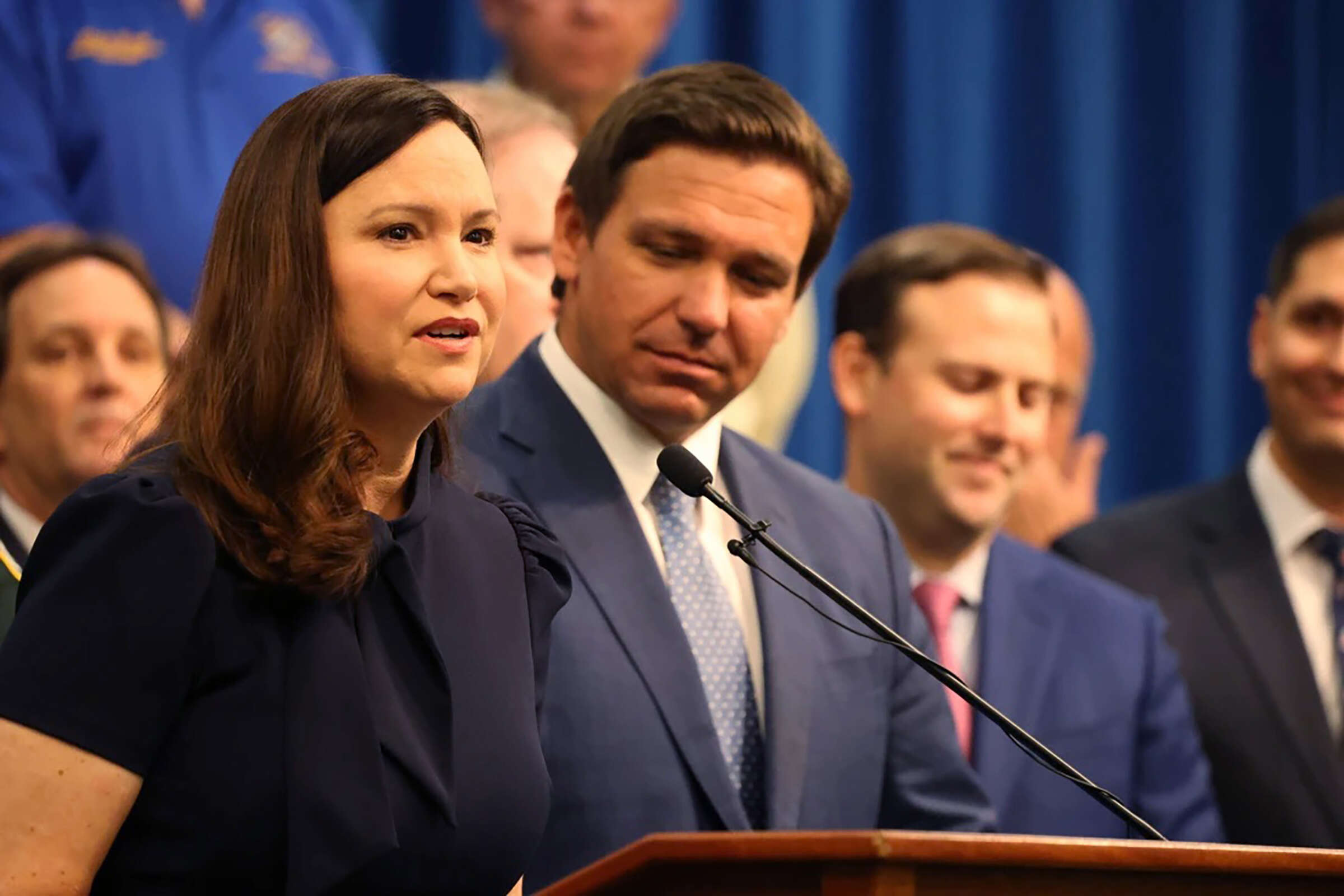
So far, opposition to legalizing recreational cannabis in the Sunshine State has come from Gov. Ron DeSantis, Attorney General Ashley Moody, the Florida Chamber of Commerce, and anti-drug groups.
Florida is one of only 18 states that allow citizen-initiated amendments to their constitutions. These measures are an example of direct democracy, and can be a more effective way for the working class to enact its wishes into law than voting for bourgeois politicians and parties, which represent the interests of the capitalist class, and hoping mostly in vain that they will be responsive to the desires of the people. These amendments will benefit workers in Florida by making their lives easier, and deserve their support and votes.
As of Sep. 23, the Florida Supreme Court has not yet scheduled reviews of the text of the two amendments.
Last updated Sep. 26, 11:39 AM ET.
Categories: Health Care, U.S. News
 C.B.P. leaves disabled refugee to die
  Registered nurse provides insight into local hospital collaboration with I.C.E.
  Denver STAR program provides five years of safer streets, stronger communities
  Cancer, capitalism, and corporate farms in Iowa
  The Red Phoenix