
Leon Valentine | Red Phoenix correspondent | Florida–
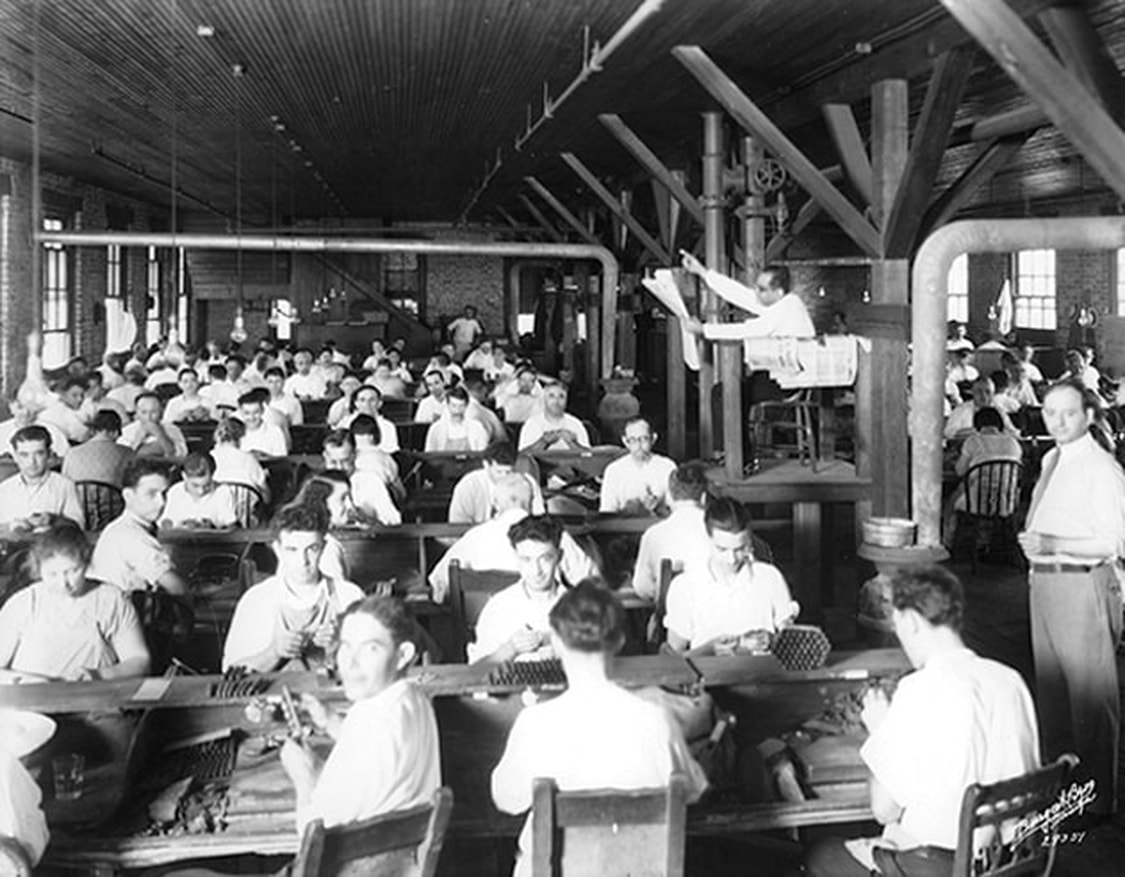
Anyone who is familiar with Tampa, FL, has most likely heard of its accompanying Ybor City. Today Ybor is a hub of entertainment with blocks filled with bars, clubs, and cigar lounges, but just over a century ago it was home to revolutionary struggles. Before Ybor became known for its nightlife it was the cigar capital of the world with many of the buildings today being old factories. These factories drew in thousands of immigrants to Tampa to take part in this highly specialized work, with a majority of the labor being supplied by migrant Cubans.
In Cuba it was a common practice for factories to employ an individual whose job it was to read aloud books to the workers, mainly as a form of workplace entertainment. As Cubans began to steadily flock to Tampa they brought this practice with them. In the Ybor factories, workers would pool up funds to hire these readers and in turn El Lector would read any manner of work. Originally the Lectores would read popular fiction but as time would pass and the Cuban workers became much more agitated against their working conditions these Lectores would begin reading radical socialist theory, with many reading the Communist Party’s Daily Worker.
The bosses, of course, could not stand to let this happen and tried many times to remove the Lectores from the factories, but because the workers were highly educated in the class struggle they were able to defend themselves. It finally took a combined effort of the Bosses, the police, and the local Klu Klux Klan to end this revolutionary practice. After that the cigar business would slowly stagnate and the factories closed down, but from their struggles we can gain some valuable lessons:
- The struggle for an independent voice of the working class is paramount.
- What scares the bosses the most is an educated, class-conscious working class.
- If the capitalists cannot secure their victory legally, they will always resort to extrajudicial and barbarous violence.
The struggle for an independent, working class media has always been of concern to the communist movement. In Germany, Marx himself lobbied and advocated for increased freedom of speech for the workers and in Russia the Bolshevik Pravda was necessary to disseminate a revolutionary message. As the class struggle heightens in America, we must struggle for a powerful voice that the working class can wield.
One final lesson we can learn from these humble cigar rollers is that socialism is not just a far away mystical ideal, but that the struggle for a better world is found in the everyday lives of the workers. Even the mundane, such as reading, is a truly revolutionary act in this world.
Categories: History, Revolutionary History, United States History, Workers Struggle
 Paddy Whalen: Tribune of the People
  The Rise and Fall of Third Worldism – Part 1
  MLK Day: the Lessons of Pacifism & the Civil Rights Movement
  Wounded Knee Anniversary: A family remembers
  The Red Phoenix