
Evan R. | Red Phoenix correspondent | Oregon–
For decades, Iran has been a target of western imperialism. Dating back to 1953’s “Operation Ajax” — in which the CIA and Britain’s MI-6, at the behest of oil companies and financial oligarchs, overthrew the democratically-elected Social Democrat Mohammed Mossadegh — the nation has found itself in the crosshairs of American imperialism.
After the overthrow of Mossadegh, he was replaced by the self-restored Shah Mohammad Pahlavi, the son of a former army officer named Reza Shah Pahlavi (formerly Reza Khan) who had ruled Iran as a king since the overthrow of the Qajar dynasty by British imperialists in 1921. In 1941, Reza was deposed by the same British imperialists who installed him when his fascist sympathies brought him into alliance with Adolf Hitler and his son was put on the throne.
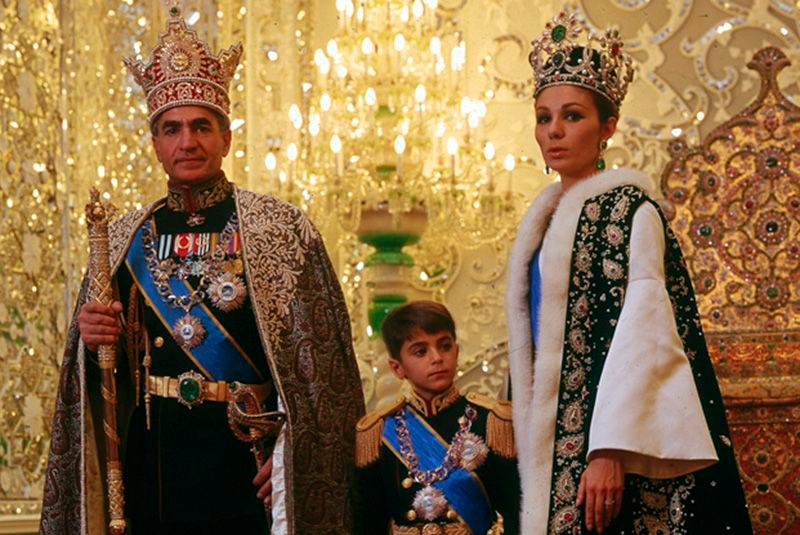
At first, before Mossadegh’s short rule, the Shah’s authority was checked by parliament, but after the coup against Mossadegh, he brought power firmly under his personal control. From court decisions and diplomatic postings to military promotions, loans, factory sites, and even university administration, almost nothing moved forward without his direct approval. This was used to enrich the Shah, his family and his cronies at the expense of the Iranian people. In collaboration with the CIA, he created SAVAK, a notorious intelligence and security organization that ruthlessly suppressed opposition. Political parties were dismantled, the media tightly controlled, and critics were monitored, imprisoned, tortured, or killed to extinguish dissent.
Most importantly, the Shah was a reliable western puppet. A devout anti-communist, he bought western arms, sided with western foreign policy goals and allowed western capital unlimited access to his country and its resources. One of the first decrees of the Shah’s new government was guaranteeing foreign companies control of 50% of Iran’s oil, and ensuring that the remaining 50% was only exploited by the Anglo-Iranian oil company (now known as BP).
The Shah was widely despised and was eventually overthrown and forced into exile in 1979 by a mass movement ranging from Communists and liberals to Shia twelvers. After the dust settled on the Iranian revolution, the largest faction was led by radical cleric Ruhollah Khomeini, who was named Ayatollah and formed an Islamic regime. Rather than freeing the people, this regime placed them under a different sort of bondage.
The Islamic regime which replaced the Shah is one of the most reactionary in the world. Now under the control of Ruhollah Khomeini’s successor, Ali Khamenei, it continues to brutally and savagely curtail the rights of the people.
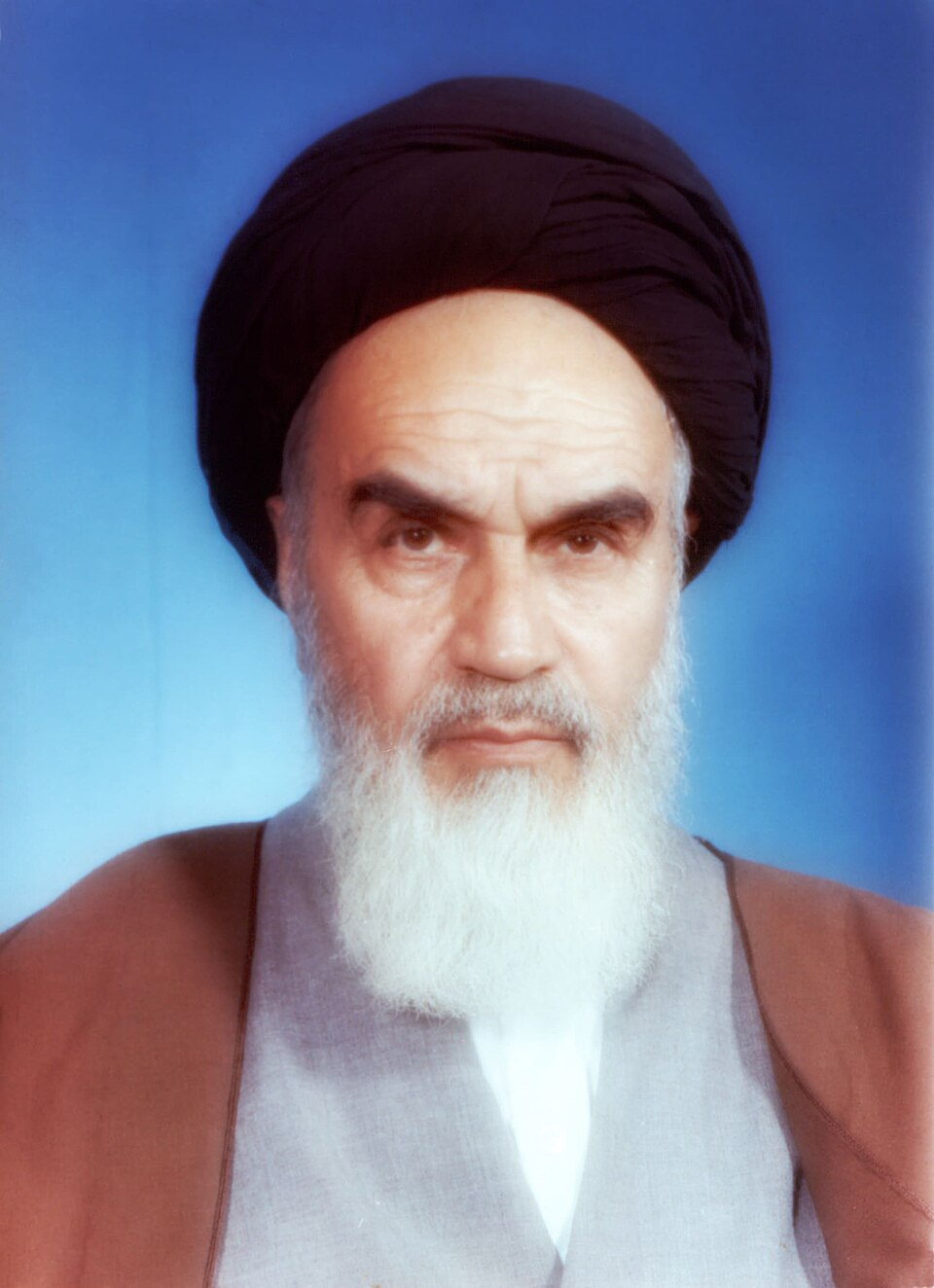
The Islamic regime was formed after a rigged referendum in 1979 received 99% of the vote. After this it consolidated itself through a period of repression of opposition, with some rebellions going on until 1988. Political opponents and dissidents were massacred and millions of Iranians fled the country. This was exacerbated by the Iran-Iraq war, which led to such a severe crisis in Iranian manpower that child soldiers were used to fill the gaps.
In the Ayatollah’s Iran, LGBTQ people are executed; ethnic minorities, especially Kurds, are suppressed; women are treated as second-class citizens; and an army of clerical police brutally enforce the nation’s strict religious laws. The Islamic regime has created a vast class of clerics who exist at the expense of the people and occupy key positions inside the government, giving them enormous power. It is these clerics who benefit from the Islamic regime, not Iranian workers.
While Iran still technically, in the capitalist sense, has a democratic system, the system is tightly regulated, with only right-wing parties allowed to operate, while the clerics retain the lion’s share of power. The clerical regime has created separate, parallel military and police structures inside the state under the aegis of the Islamic Revolutionary Guards Corps, which maintains an army, navy, air force and police and is considerably more powerful than the regular military. The IRGC is chosen for their loyalty to the clerics and their specific version of Islam, and is the primary instrument of repression of the people.
While deeply reactionary, the Islamic regime is also extremely opposed to the U.S. and Israel. This, combined with its nationalization of oil resources, has made it an enemy of the US corporations and government which are constantly seeking to expand the exploitation of wealth from oil. Tensions have simmered between the two ever since the founding of the Islamic regime, but in recent decades the situation has increasingly tipped towards war.
After America’s defeat in Iraq — due in no small part to militias trained and supported by Iran and the subsequent expansion of Iranian influence in Iraq, Yemen, Lebanon and Syria as part of what was termed the “Axis of Resistance” — the United States came to view the destruction of the Islamic regime as an urgent strategic necessity both for its own sake and that of its proxies, Israel and Saudi Arabia.
To this end, the nation has been crushed under the weight of economic sanctions, causing severe shortages of everything from food and fuel to medicine and consumer goods, and this is all by design. Beyond shortages, the nation suffers from acute hyperinflation, with 1 US dollar equivalent to 1,065,000 Iranian rials as of the time of writing. The US imperialists use their considerable economic might to crush Iran under the weight of deprivation. These sanctions do not hurt the clerics, who live lives of luxury and privilege, but the Iranian workers who struggle to survive in an increasingly precarious society.
To make the situation worse, decades of drought and bad management have caused a water crisis so severe that plans have been drafted to evacuate Tehran and relocate the capital as reservoirs dry up. The Islamic regime, crushed under the weight of sanctions and its own contradictions, can do nothing to prevent this crisis from getting worse save denying the luxuries to the clerics which is unacceptable to them.
The situation for workers in Iran has become intolerable. Having to bear the burdens of climate change, economic collapse, the failures and endless repression of the Islamic regime and the albatross of American imperialism, it is no surprise that the Iranian people have risen up in large numbers to oppose the status quo. The people’s resistance against this reactionary regime is valid and understandable in any form it takes.
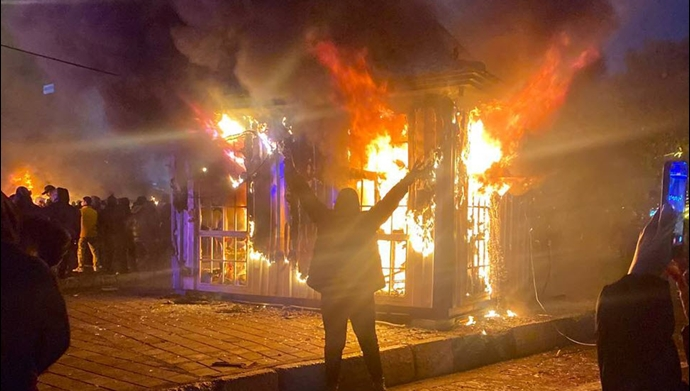
The Islamic regime has responded with its usual brutality. Thousands are dead in crackdowns across the nation and tens of thousands have been arrested. The IRGC and police opened fire on crowds with live ammunition and massacred demonstrators night after night. Iranian state TV is flooded with images of the dead, a macabre reminder of the repressive power of the bourgeoisie, of any nation.
Although the Iranian government claims that these protests were orchestrated by American and Israeli imperialists, and while the imperialists have no doubt capitalized on the situation, the uprising began chiefly because the clerics cannot and will not address the grievances of the masses of the people. Ever since its foundation, the Islamic regime has been dangerously unstable and these uprisings are just the latest manifestation of this widespread discontent. Uprisings have occurred against the Islamic regime roughly every 5-10 years, and are growing increasingly more frequent as the nation’s economic situation declines.
As tensions escalate in Iran, it becomes increasingly likely that America will use these protests as pretexts for its reactionary aims. American airstrikes are becoming evermore an active potentiality. Sources in the media claim that Trump was talked out of strikes at the last moment and is now preparing for a more comprehensive attack on Iran. In recent weeks, Trump has been openly calling for regime change and has even deployed a carrier battlegroup to the nation’s coast. While the Islamic Regime has failed its people, the American and Israeli imperialists have no interest in making things better for them. American meddling created the situation, its intensification will not fix it.
Despite the reactionary nature of the Islamic regime, we must oppose the imperialist machinations of the American and Zionist regimes, who are acting in their own interests and not those of the Iranian people.
We must especially oppose the genocidal and expansionist plans of the Zionists, who seek to create a “greater Israel” by annexing all of their neighboring states and depopulating them of their native inhabitants. Zionism is a form of fascism, and replacing the Islamic regime with a government acceptable to these fascists will neither help the Iranian people nor the people of the Levant who suffer from Zionist imperialism.
We must resolutely support the Iranian working class in their struggle for liberation from both the Islamic regime and foreign imperialism, and their struggle to build a truly sovereign Iran which has control of its own resources and respects the rights of its people. Although heavily repressed, historically progressive movements do exist inside Iran. These movements, and their struggles, must be supported.
We must resist all efforts to start a war with Iran, especially those of the rogue apartheid state of Israel. We must resist the farcical attempts to restore the Shah through his son Reza. We must resist any covert or “black” ops against Iran carried out by foreign powers.
As internationalist workers, it is our duty to also build up our organizing here, not only to free ourselves, but also to oppose all meddlings of US imperialism. The Iranian people must be allowed to direct their own affairs without foreign influence.
Categories: Anti-War, International, Iran, U.S. News
Related Articles
-
 RYR on Iran: Youth disproportionately affected by violence of imperialism
-
 U.S., Israel launch illegal war on Iran; all out in protest!
-
 Call to the peoples of the world: Let us oppose American-Israeli aggression against Iran!
-
 International Conference of Marxist-Leninist Parties and Organizations: Imperialists and your henchmen: Get your filthy hands out of the Middle East!
 The Red Phoenix