
John M. & Monty Sportello | Red Phoenix correspondents–
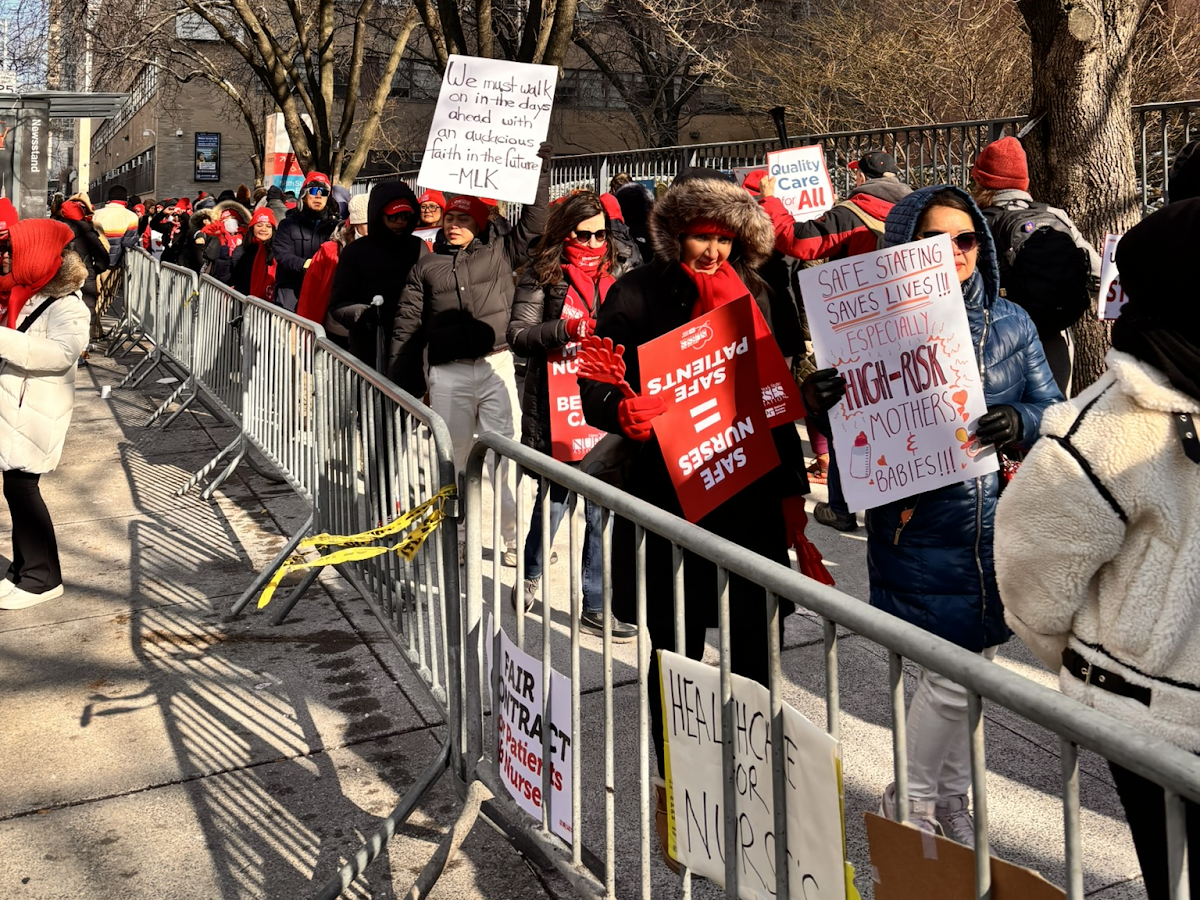
In a powerful show of solidarity, nearly 15,000 nurses walked off the job this week, launching the largest nursing strike in New York City’s history. Starting early Monday morning, workers from major hospitals like Mount Sinai, Montefiore Medical Center, and NewYork-Presbyterian stood together on picket lines, demanding better pay, safer working conditions, and enough staff to handle the daily crush of patients. This action highlights the deep divide between those who keep our health system running and the executives who profit from it, reminding us that real change comes when everyday people band together against unfair systems.
On Monday, January 19th, Red Phoenix correspondent Monty Sportello joined the crowded picket line outside Mount Sinai West. Community support was broad and visible: nieces, nephews, sons, and daughters of nurses marched alongside the workers, while union supporters distributed hot food–pizza, coffee, and baked goods–to sustain the strikers through the extreme winter cold. The scene reflected the collective character of struggle, with workers and their families acting as a united social force rather than isolated individuals.
The strike kicked off on Monday, Jan. 12, after contract talks broke down that previous weekend, with nurses represented by the New York State Nurses Association refusing to accept shortchanging on basic needs. Their old contract expired at the end of last year, leaving them without protections which are essential for both their safety and patient care. Nurses like Tristan Castillo from the emergency department at NewYork-Presbyterian put it plainly: “They don’t want to give us a fair contract, and they don’t want to give us safe staffing, and now they’re trying to roll back on our benefits.” Others on the lines echoed this, chanting for a “fair contract now” while braving the cold to make their voices heard.
At the heart of the dispute is staffing–or the lack of it. Conversations with striking nurses confirmed that the central objective is to defend existing staffing and to prevent further deterioration of working conditions. One nurse, Shannon, a Filipina-American with eight years in the profession and the thirteenth nurse in her family, described conditions that demonstrate the system’s contempt for reproductive labor and women workers: lactation rooms without chairs forcing mothers to stand while breastfeeding, and the absurd reality that the hospital she works at is not even covered by her own health insurance plan. When asked about hospital public relations statements portraying union demands as “unreasonable,” she characterized this narrative bluntly as “victim blaming.”
Nurses repeatedly linked their immediate workplace struggle to broader political and structural developments. Several pointed to worsening staffing ratios and declining working conditions as discouraging young people from entering the profession, especially amid federal policy changes removing nursing from the roster of professional degrees. A prominent sign on the line captured the class reality succinctly: “More nurses, better care.” In other words, the contradiction between profit and public health is not abstract, it is embodied in the number of workers allowed to exist on a ward.
Hospital bosses, meanwhile, have dug in their heels, calling the demands “extreme” and “reckless.” They’ve hired over a thousand temporary nurses to keep doors open, rerouting ambulances and canceling some procedures to manage the gaps. Mount Sinai even fired three nurses, accusing them of hiding supplies during drills – a move the union calls bullying to scare others from joining the strike. One of those fired, Liliana Prestia, fired back at a rally: “We will not be bullied. It was Mount Sinai’s cruel attempt to stop us from joining the strike line and to make us an example to our fellow nurses.”
Executives point to big numbers, like claims of a 40% pay hike that could push average salaries to $220,000 or more in three years at some sites. But nurses counter that their proposals are more modest – around 25% over the same period – and necessary after years of underinvestment. This clash underscores a bigger truth: while hospital CEOs rake in millions – one at Montefiore made over $16 million last year, another at NewYork-Presbyterian topped $26 million – frontline workers struggle with burnout and bills. As Mayor Zohran Mamdani said while visiting the pickets, “There is no shortage of wealth in the healthcare industry… These executives are not having difficulty making ends meet.” He urged both sides back to the table, but stood firm with the nurses, saying they deserve “dignity, respect and the fair pay and treatment that they deserve.”
Governor Kathy Hochul has stepped in too, declaring a state of emergency over fears the strike could endanger lives, and sending health officials to monitor care. She’s called for a deal that honors the nurses’ vital role, but so far, talks haven’t resumed since Sunday. By Tuesday, the second day of the walkout, hospitals reported no major disruptions, though the union filed charges against Mount Sinai for unfair labor practices. Nurses like Roy Permaul, an ICU worker, vowed to hold out: “We’re prepared to stay out for as long as needed to secure a better contract.”
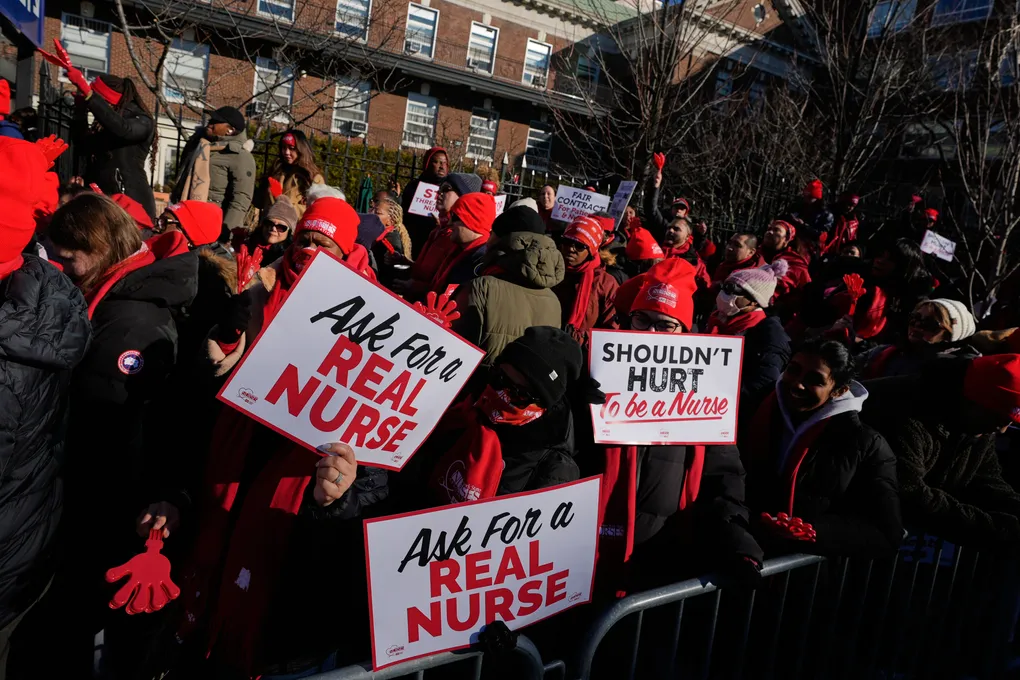
This isn’t the first time nurses have had to fight like this. Just three years ago, in 2023, a similar three-day strike won pay raises and staffing improvements, though both sides now argue over whether those gains have held up. Today’s action builds on that, showing how collective strength can challenge a setup where profits often trump people’s well-being. As Dania Munoz, a nurse practitioner at Mount Sinai, explained: “We deserve fair pay, but this is about safety for our patients, for ourselves and for our profession.”
The strike exposes the bankruptcy of reformist illusions that for-profit healthcare can be humanized through technocratic management. The bourgeois state, whether through Democratic mayors or Republican federal policy, acts uniformly to preserve the dictatorship of capital. Only the independent organization and militant struggle of the proletariat can secure real gains, and only the overthrow of the capitalist system can end the contradiction between profit and human life in healthcare.
In a city built on the backs of its workers, this strike is a call for a fairer share – one that puts health and humanity ahead of the bottom line. As negotiations drag on, the outcome could set the tone for labor fights everywhere, proving that when people unite, they can push back against inequality and build something better for all.
 “Red Aid” Service to the People Program builds connections in communities, labor movement
  Striking workers shut down 21 ports in solidarity with Palestine
  1933: A fateful year in the working-class movement of Puerto Rico
  In praise of Michael Parenti (1933–2026)
  The Red Phoenix