
Keegan D. | Red Phoenix correspondent | Illinois–
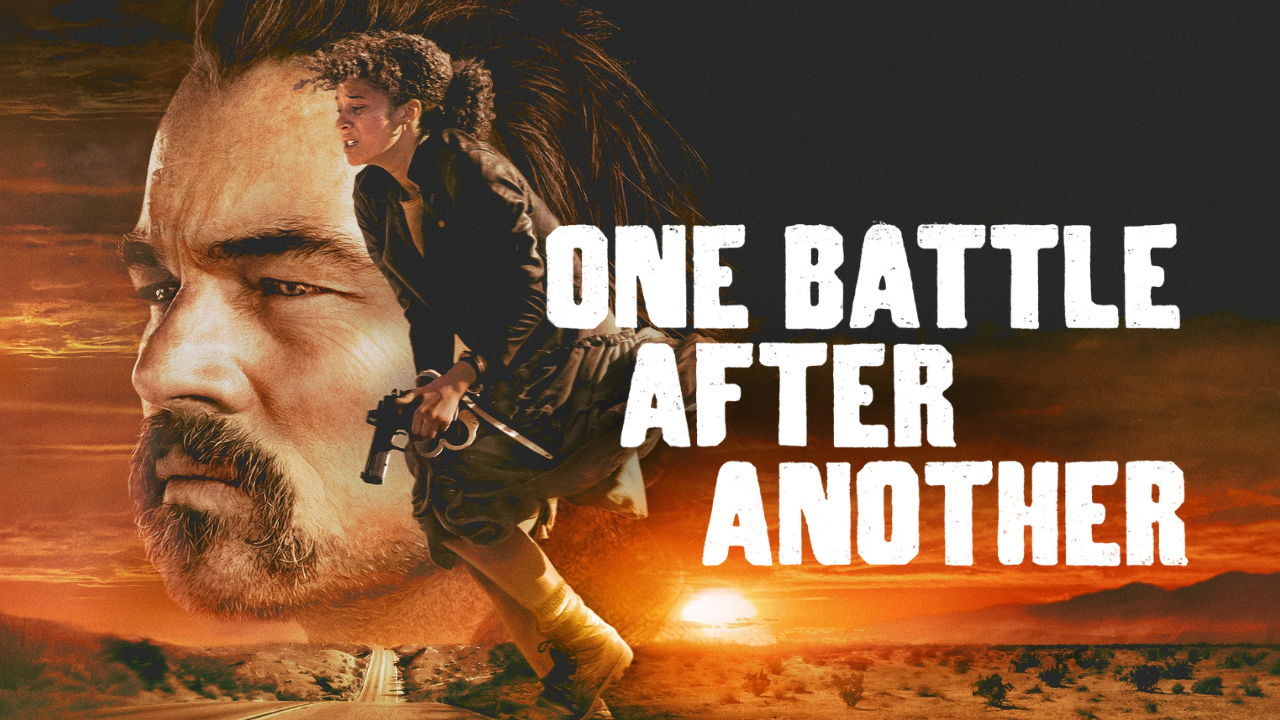
One Battle After Another, directed by Paul Thomas Anderson and starring Chase Infiniti, Teyana Taylor, Leonardo DiCaprio, and Sean Penn, is a spectacle that has gripped audiences across the country since its late September release. While it can be fun, and perhaps even inspiring, to see depictions of “revolutionary” struggle, One Battle After Another is limited like every other piece of bourgeois media due to its inability to go beyond the ideological limitations of capitalism.
The film centers around a group of adventuristic and vaguely “left-wing” guerrillas operating in the American southwest, called “The French 75,” who commit a number of carefully planned operations and acts of protest against a version of the US government ran by pedophile oligarchs — essentially similar to our current government but just swapping the names of a few key individuals and organizations.
For the first half of the movie the film follows The French 75, of whom DiCaprio and Taylor’s characters are members, as they form their organization and carry out sabotage attacks on immigrant detention centers, pull off bank robberies, and make daring escapes from federal authorities. Then, for reasons which will be discussed thoroughly below, Taylor’s character becomes an informant for the US government, and aids Penn’s character in arresting the majority of The French 75. This then forces DiCaprio into hiding along with his new born baby, who Taylor’s character is the mother of, and is later played by Chase Infiniti. The remainder of the film follows DiCaprio and Infiniti’s characters, along with a few other members of The French 75, as they attempt to avoid capture from the State a decade and a half after the initial crackdown on the group.
Why many have found the film so appealing
Many in progressive circles have found the movie extremely compelling, and often for good reason. First and foremost, it’s satisfying for many to see temporarily successful acts of resistance against fascistic organizations in the United States, especially as I.C.E, the National Guard, and Border Patrol have increasingly escalated their destructive operations since the movie’s release. It should be clear that these aspects of the film are not the center of this critique. This critique makes no moralistic criticism of the fictional acts carried out by The French 75, except perhaps the timing of these actions in relation to their other organizational practices (or lack thereof). Having a movie with a Hollywood budget that depicts self proclaimed revolutionaries getting away with militant armed resistance, at least for a time, is enjoyable. On that note, the movie is also generally well acted and directed, with a surprisingly engaging pace for a two hour and fifty minute movie. However, this is still very much a Hollywood film in need of deep criticism, particularly both the film’s beginning and ending.
The odd reliance on racist and patriarchal stereotypes to portray state infiltration and informants
What immediately sticks out in the film, is the seemingly unnecessary use of harmful hyper-sexual stereotypes about African-American Women. The first twenty minutes of the film are shot in a rapid montage fashion and initially depict DiCaprio and Taylor’s characters switching back and forth between preparing for acts of resistance and being intimate with one another. While graphic, it’s not at the beginning problematic, until a point in the montage in which Sean Penns character, a federal agent, purposefully fails to stop Taylor while she is attempting to sabotage a migrant detention center because Taylor seduces him. The montage then becomes a mixture of sexual acts between Taylor and DiCaprio as well as Taylor and Penn, alongside more operations of The French 75. This all leads to the impression that Taylor’s character is only in the fight against oppression for some type of Sexual gratification, rather than a commitment to any real type of revolutionary principles. Finally, this impression is only further emphasized by the fact that the key reason why Taylor eventually turns into an informant for the government, is due to her relationship with Penn’s Character and in order to run away from the responsibilities of being a parent. This also sets up questions about the paternity of Infiniti’s character later on in the film. After getting the majority of the French 75 captured, Taylor’s character then also flees from Pen’s character and hides somewhere in South America. All of this is seemingly done in the name of representing the historically real danger for left wing movements to face government infiltration and informants, however it comes off as extremely unnecessary and jarring. It’s clear that this danger could have undoubtedly been explored within the film without relying on the hypersexualization of Taylor’s character, and still been in line with the theme and pace of the rest of the film (as little to none of the remainder of the film is sexual in nature, or even on off-screen sexual relationships).
In addition to the depiction of Taylor’s Character, another African-American member of The French 75 repeatedly calls herself and is referred to as “Jungle Pussy”. While this could perhaps be charitably interpreted as an act of “reclamation”, the film never makes this a point and is an odd detail to add with the already noted hyper-sexualization of Taylor’s character. Additionally, this is one of the only other named members of The French 75, and the name later is seemingly blamed for making the character a priority target during the state’s crackdown. By contrast, no white members of the French 75 are hypersexualized or betray the organization due to any relationships. These details force us to ask why African-American Women are depicted in this fashion by the film, and make it a necessity to point out that these depictions are inaccurate and harmful. African-American women and their sexuality is not and has never been a threat to revolutionary movements, so why make it the center of The French 75’s acknowledged failure in this film?
The lack of program or possibility for victory
In addition to the film’s problematic beginning, One Battle After Another faces another issue made apparent by the ending — the film truly is one battle after another yet the characters don’t seem to ever learn what war they are fighting these battles in: the class war! Much like many other “left-wing” movies which have come out in recent years, One Battle After Another makes little to no mention of the communist politics or organizational work which would be necessary to organize a successful movement against the capitalist system which is causing the fascistization of both our current government and the government which the movie depicts.
The French 75 and their actions are not embedded within a working class movement or socialist political program, and even at points in the movie where they seem to have popular support, they offer no plan for the people to organize in a way that goes beyond the capitalist system. However, at the end of the film this observation is not the message which the film would like its audience to take away. After successfully escaping the authorities again, the movie approvingly shows Infiniti’s character leaving the house to join a peaceful protest, symbolically picking up the torch from DiCaprio’s character while disavowing the tactics of The French 75.
While the director may not realize it, this ending ensures that the characters, and anyone who adopts this film’s final message, are condemned to continue fighting one battle after another even if they now do so with a liberal notion of “peace and respectability”. The French 75 are undoubtedly an adventurist group whose tactics should not be directly copied. However, The French 75’s fall into adventurism was not simply because of their openness to utilizing extra-legal tactics, but due the fact that they were implemented without connection to a strong working class movement poised to take over society’s economic foundation from the capitalist elite. This is not an error which the supposedly positive ending addresses. Instead the characters have just found a new way to express their frustration without actually effectively challenging the fascist government and the bourgeois class.
Conclusion
In order for any inspiration taken from the film to be useful, the critiques above and made by others must also be internalized. We cannot get caught up in glorifying the idea of fighting one battle after another, we must learn from and go beyond One Battle After Another. The goal is not to keep fighting battle after battle while utilizing increasingly “respectable tactics”. The goal is to win power for the working class through whatever means and tactics are necessary, and to create the foundations for a world in which we no longer have to fight these same battles. This is the conclusion that One Battle After Another fails to come to, but its audience must.
Categories: Media & Culture, Movies
 The “Molly Maguires,” America’s first great class war
  After 35 years, “Paris Is Burning” remains essential class-conscious queer cinema
  Film review: “Glory” and the art of liberation
  Hollywood Blacklist: “Salt of the Earth” and a demand for political reckoning
  The Red Phoenix