
John M. | Red Phoenix correspondent | Colorado–
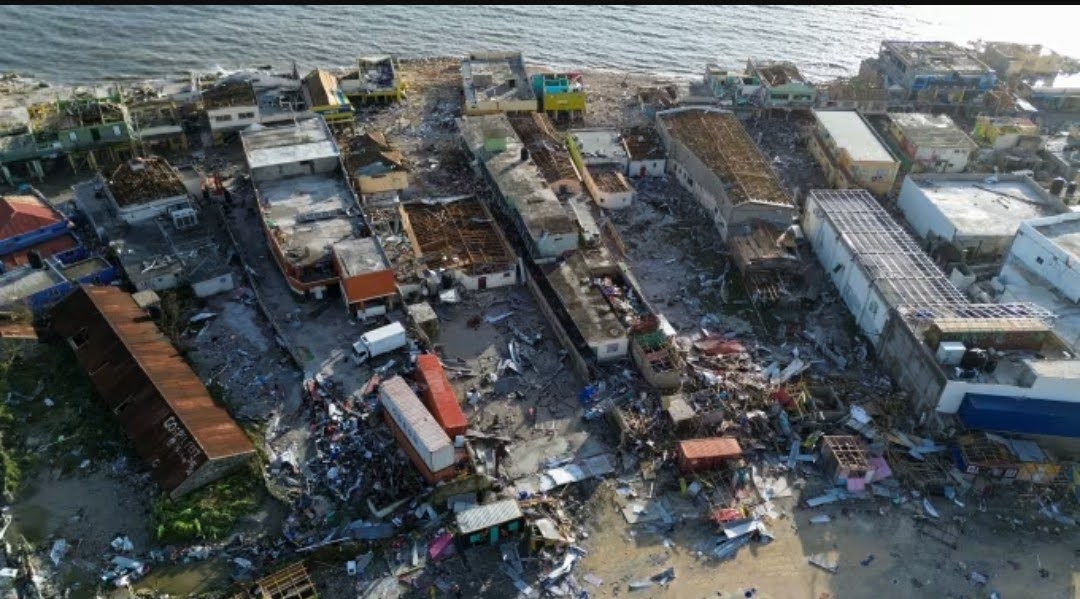
In the sweltering heat of late October, the Atlantic Ocean birthed a monster. Hurricane Melissa, the thirteenth named storm of an already punishing 2025 season, exploded from a disorganized tropical wave into a Category 5 behemoth, slamming into Jamaica with winds gusting up to 252 mph—the highest ever recorded by NOAA Hurricane Hunters. By the time it churned through Cuba and brushed the Bahamas, Melissa had carved a path of devastation across the Caribbean, claiming at least 63 lives and inflicting an estimated $48-$52 billion in damage. But beyond the howling winds and torrential floods, Melissa stands as a stark emblem of our warming world—a supercharged storm fueled by human-induced climate change that disproportionately crushes the world’s most vulnerable.
Melissa’s saga began innocuously on October 16, when the National Hurricane Center first flagged a westward-moving tropical wave. Lingering in weak steering currents, it meandered northwest, gathering strength amid record-hot seas. By October 25, the storm underwent “extreme rapid intensification,” surging from 70 mph to 140 mph winds in under 24 hours—a feat climate scientists attribute directly to ocean temperatures 2-3°C above normal.
On October 28, Melissa made landfall near New Hope, Jamaica, as a peak-intensity Category 5 with 185 mph sustained winds and a central pressure of 892 millibars, tying it with the infamous 1935 Labor Day Hurricane as the most intense Atlantic landfall on record. The island, unaccustomed to such raw power, reeled. Entire neighborhoods in St. Elizabeth Parish were obliterated, with Black River reduced to rubble-strewn streets and toppled electrical poles. Floodwaters swallowed homes in Howard Acres, while landslides buried roads, isolating over 200 communities and cutting power to 530,000 residents.
The storm didn’t relent. Crossing into Cuba the next day as a Category 3, it dumped up to 25 inches of rain in mountainous regions, prompting the evacuation of 735,000 people. In Haiti and the Dominican Republic, outer bands triggered deadly floods and landslides, killing 29 in Haiti alone. As Melissa weakened to a Category 1 while grazing Bermuda on October 31, its legacy was clear: a hurricane that redefined destruction in the Caribbean.
Melissa wasn’t just powerful; it was unnaturally so. Scientists from Imperial College London, in a rapid attribution study, concluded that human-caused climate change—driven primarily by fossil fuel emissions—made a storm of Melissa’s magnitude four times more likely and amplified its winds by 7% (about 19 km/h). In a pre-industrial world, such an event would strike Jamaica once every 8,000 years; today, it’s every 1,700.
The mechanism is straightforward yet terrifying: Warmer oceans, absorbing over 90% of excess heat from greenhouse gases, provide hurricanes with boundless fuel. Caribbean waters hit 30°C (86°F) this summer, enabling Melissa to reach its “maximum potential intensity”—the theoretical peak for given conditions. This heat not only boosted wind speeds but loaded the atmosphere with moisture, leading to rainfall totals of up to 40 inches in Jamaica—enough for catastrophic flash floods and landslides.
This isn’t an anomaly. The 2025 Atlantic season has seen four storms, including Melissa, undergo such rapid intensification, a trend linked inexorably to the climate crisis. As Kerry Emanuel, a leading hurricane expert, notes, while the number of storms may remain stable, their ferocity is escalating, turning what might have been a manageable disturbance into a record-shattering apocalypse. Without urgent emissions cuts to cap warming at 1.5°C, future Melissas will only grow fiercer, with winds potentially 26 km/h stronger in a 2°C world.
Jamaica’s south coast, where Melissa struck hardest, is a mosaic of resilient yet fragile communities—fishing villages, agricultural hamlets, and informal settlements where working-class families scrape by on tourism and farming wages. Here, the storm’s wrath exposed deep inequities. Low-lying coastal areas, home to many poor households, bore the brunt of 13-foot storm surges that “wiped out infrastructure like a tsunami,” according to World Food Programme officials. In Black River and Santa Cruz, zinc-roofed homes were shredded, leaving families like those in St. Elizabeth Parish sifting through debris for salvaged belongings.
For the working poor, recovery is a cruel calculus. Over 240,000 lost power, crippling access to refrigeration for perishable goods and medications. In Haiti, where half the population already faces food insecurity, Melissa destroyed crops just as the rainy season loomed, exacerbating hunger for 9,500 vulnerable households. Landslides in the Dominican Republic and Haiti claimed lives in rural enclaves, where informal economies offer no safety net—fisherfolk drowned in swollen rivers, farmers buried under mudslides that erased their livelihoods.
These communities, often Black and Indigenous, live in the shadows of colonial legacies and economic disparity. They lack the insurance, sturdy housing, or evacuation resources that wealthier urbanites in Kingston might scrape together. As Project HOPE warns, the ripple effects—trauma, lost prescriptions, mental health crises—will linger for years, straining underfunded health systems. In Cuba, isolated rural parishes with 140,000 residents face weeks without aid, as flooded roads block food and water deliveries. Globally, 1.6 million children in the storm’s path are at risk, their futures dimmed by disrupted schools and shattered homes.
This isn’t abstract injustice; it’s the climate crisis’s cruel arithmetic. Poor nations like Jamaica emit a fraction of the CO2 that powers the industrialized world, yet they reap the whirlwind. Working-class families, reliant on climate-vulnerable jobs, lose everything while global emitters profit from fossil fuels.
As search-and-rescue teams comb Jamaica’s ruins and Bermuda shakes off hurricane-force gusts, Melissa demands more than pity, it demands action. Wealthy nations must honor climate finance pledges, funneling billions into resilient infrastructure for the Caribbean’s poor. Locally, organizations like the Red Cross and World Vision are mobilizing shelters and hygiene kits for 165,000 at-risk Jamaicans, but long-term recovery hinges on flexible, community-led funding.
Hurricane Melissa’s 2025 rampage was a tragedy foretold by decades of unchecked emissions, its outsized power a direct indictment of our warming planet. From Jamaica’s flattened communities to Cuba’s flooded highlands, the storm’s scars remind us that climate change isn’t abstract—it’s rewriting disaster’s script, making hurricanes deadlier, costlier, and more frequent in their extremes. Yet, amid the wreckage lies opportunity: bolstering resilient infrastructure, curbing emissions through global pacts, and aiding vulnerable nations can blunt future blows. As Melissa fades into history’s storm logs, the urgent question remains: Will we heed its roar before the next one drowns it out?
Categories: Environment, International, U.S. News
 Indigenous people of Sumatra protest P&G deforestation at Ohio May Day
  Editorial: The Wonderful American World of Informers and Agents Provocateurs
  Wal-Mart destroys the cultural heritage of Mexico
  8 Atrocities Committed Against Puerto Rico by the US
  The Red Phoenix