
John M. | Red Phoenix correspondent | Colorado–
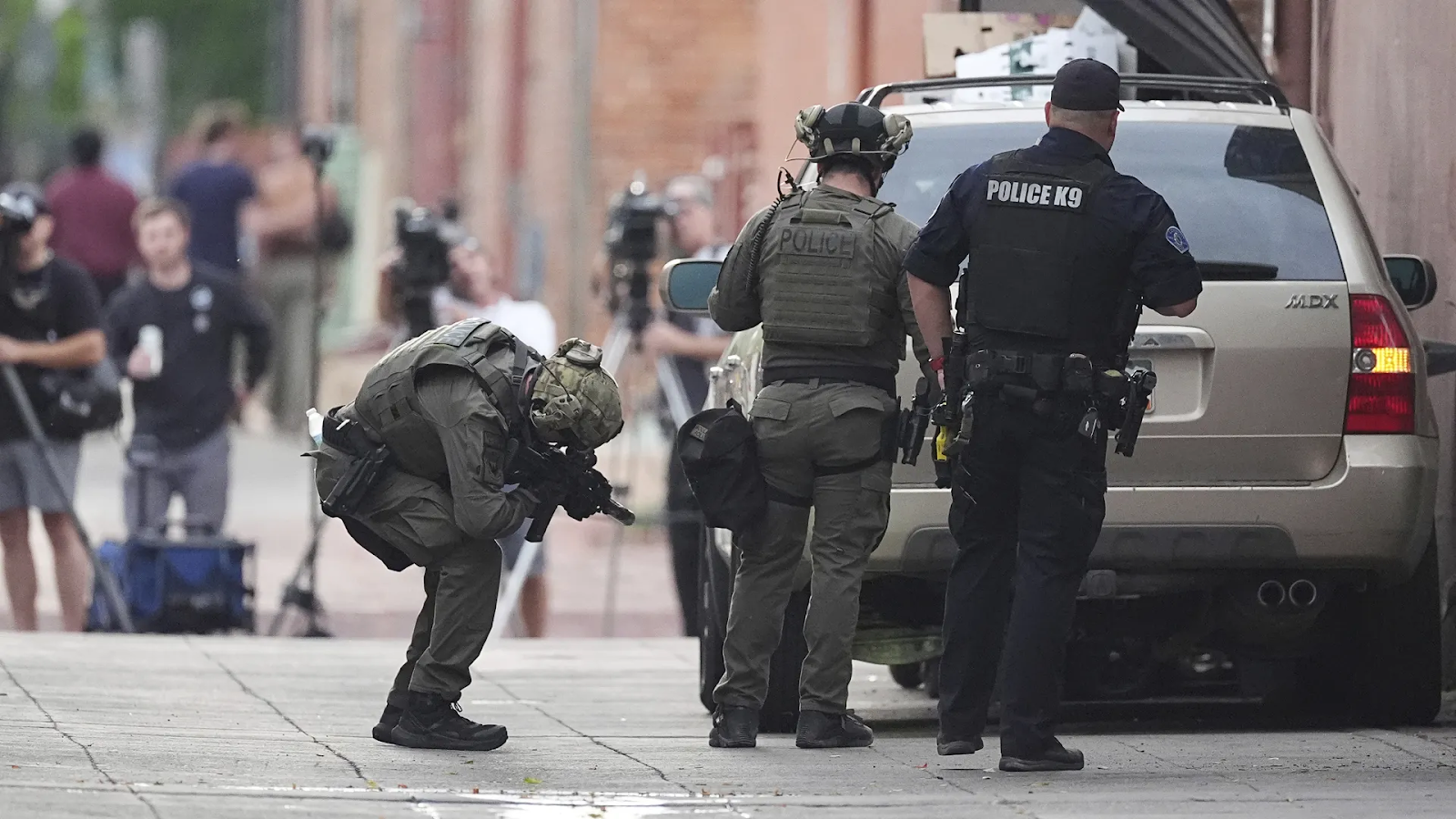
On Sunday, June 1, 2025, a violent attack disrupted a peaceful gathering in Boulder, Colorado, organized by Run for Their Lives, a group raising awareness for Israeli hostages held in Gaza. The assailant, identified as 45-year-old Mohamed Sabry Soliman, allegedly shouted “Free Palestine” while deploying a makeshift flamethrower and Molotov cocktails, injuring 12 people, including a Holocaust survivor. The FBI is investigating the incident as a targeted act of terrorism, and Soliman faces federal hate crime charges alongside 16 counts of attempted murder, potentially carrying a cumulative sentence of over 600 years. This horrific act of violence, condemned widely across political and community lines, cannot be understood in isolation. Incidents like these are embedded in broader systemic tensions, including the Israel-Palestine conflict, which fuels global outrage and local acts of desperation. While the Boulder attack is indefensible, it emerges from a context where imperialist policies, particularly Israel’s actions in Gaza, exacerbate inequalities and inflame grievances that ripple across borders.
The Boulder incident targeted a group advocating for the release of Israeli hostages, a cause rooted in the aftermath of the Oct. 7, 2023 attack on Israel, which killed around 1200 people and claimed over 240 hostages. Run for Their Lives, a volunteer-led initiative, frames its weekly walks as apolitical, focusing on humanitarian concern for captives. However, the attacker’s reported cries of “Free Palestine” and “End Zionists” suggest a motivation tied to the broader Israel-Palestine conflict, specifically opposition to Israel’s policies.
This act reflects the frustration of marginalized individuals caught in a world shaped by imperialist power dynamics. Soliman, an Egyptian national whose asylum application was denied in 2005, operated alone, with no evident ties to organized groups. His actions, while criminal and misguided, can be seen as a distorted response to the perceived impunity of powerful state actors like Israel, whose military campaigns are backed by Western capital and political support. The rage expressed in such acts often stems from the powerlessness felt by those on the periphery of global systems, where working-class and oppressed communities withstand the worst of imperialist violence and economic exclusion.
The Israel-Palestine conflict provides critical context for understanding global reactions, including the Boulder attack. Since October 2023, Israel’s military campaign in Gaza has resulted in over 62,000 Palestinian deaths, mostly women and children, and injured more than 111,000. The campaign, launched in response to the Oct. 7 operation, has razed entire cities and destroyed hospitals, schools, and cultural landmarks, and displaced nearly all of Gaza’s 2.3 million residents. The blockade of aid has pushed Gaza to the brink of famine, with per capita water consumption dropping to 3–5 liters per day and a sewage crisis threatening disease outbreaks.
This devastation, described by top genocide scholars and prominent human rights organizations, as ethnic cleansing and genocide, reflects the priorities of a capitalist-imperialist system where state power serves elite interests. Israel, heavily subsidized by U.S. military aid, $17.9 billion since October 2023, operates with near-total impunity, shielded by Western governments and corporate media. The destruction of Gaza’s infrastructure, including 69% of its buildings and 92% of housing units, serves not only military but economic ends, clearing land for potential redevelopment that benefits Israeli and Western capital while displacing Palestinians. The working-class Palestinian population faces annihilation, while Israel’s ruling class, backed by global powers, consolidates control over resources and territory.
The lack of accountability for Israel’s actions, evidenced by the U.S. vetoing UN resolutions and continuing arms sales, creates a perception that the state can “get away with whatever it wants.” This impunity fuels anger among global working-class communities, particularly in the Global South, where people see parallels between their own exploitation and the suffering in Gaza. The Boulder attacker’s actions, while indefensible, reflect this broader resentment against a system that prioritizes imperialist agendas over human lives.
The incident in Boulder also highlights how class dynamics shape responses to global conflicts. The victims, ranging from 52 to 88 years old, were part of a community event in an affluent college town, advocating for a cause tied to Israeli state interests. Meanwhile, the attacker, an individual on the margins of U.S. society, appears to have acted out of a sense of solidarity with Palestinians, however violently misdirected. This clash underscores how imperialist conflicts abroad, rooted in the exploitation of resources and labor, reverberate in local settings, pitting marginalized individuals against those perceived as aligned with oppressive systems.
The capitalist system thrives on such divisions, deflecting class solidarity into ethnic or religious antagonisms. Instead of uniting against the ruling elites who fund and perpetuate wars, communities are fractured by narratives of “antisemitism” or “terrorism.” While the Boulder attack was labeled antisemitic by politicians and mainstream media, framing it solely as a hate crime, risks obscuring the systemic issues at play. The real enemy is not Jewish or Palestinian people but the ruling classes; Israeli, American, and global, who profit from war and occupation. Arms manufacturers like Lockheed Martin and Raytheon profit from U.S. military aid to Israel, while real estate and energy interests eye Gaza’s reconstruction as a lucrative opportunity. Meanwhile, working-class communities, whether in Boulder or Gaza, face the fallout: violence, displacement, and economic precarity.
Condemning the Boulder attack means rejecting violence against civilians, but it also requires addressing why such acts happen. Israel’s destruction of Gaza, enabled by Western support, creates conditions where desperation festers. Solidarity with Palestinians means advocating for an end to Israel’s blockade, military occupation, and displacement policies, while also condemning violence against civilians, whether in Boulder or Gaza. It requires building movements that unite working-class people across identities to challenge the global ruling class, from arms manufacturers to state leaders, who perpetuate these cycles of destruction. Only through collective action can we dismantle the systems that fuel such tragedies and create a world where no one feels driven to such desperate acts.
Categories: Anti-War, U.S. News
 RYR on Iran: Youth disproportionately affected by violence of imperialism
  U.S., Israel launch illegal war on Iran; all out in protest!
  Venezuela’s Cilia Flores, ‘First Combatant’ of the Bolivarian Republic
  U.S. interference in Iran cannot fix political crisis
  The Red Phoenix