
Margarethe Wegner | Red Phoenix correspondent | Minnesota–
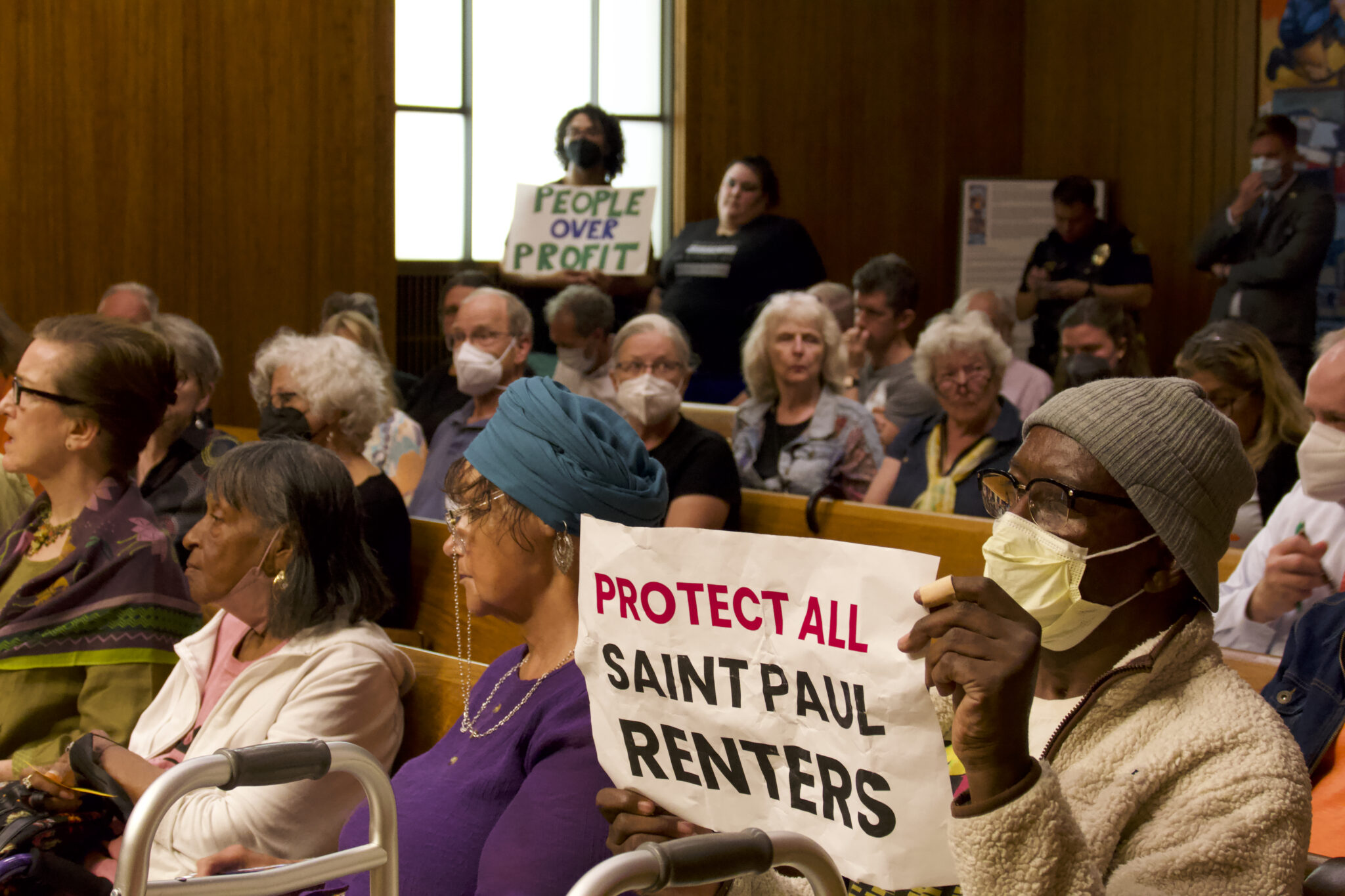
At the start of May, the Saint Paul City Council reversed its 2021 rent control measures in a 4-3 vote, selling out its constituents to developers desperate to extract higher rents. These original measures consisted of a rolling rent control that would slow the rate of rent increase in buildings that were 20 or older to 3% a year. Instead, the City Council’s new measure, as of May 7, has a hard cutoff for January 1, 2005, which means that any building built after this date is not beholden to the 3% a year rent increase cap. It’s clear that this decision caters to the poor millionaires that were too afraid to “lose” money in a rent-controlled market. With the cap rescinded though, these developers will no doubt flock to Saint Paul with the zeal of gold prospectors rushing to California. Or, that would be the wish of the City Council at least.
Upon closer inspection, the statement that “developers were not investing in Saint Paul because of the rent cap” is a flimsy excuse: Minneapolis, a city without a rent cap implemented, had a larger decline in housing development investment, 88%, than the city of Saint Paul, 81%. With the alleged insanity of Saint Paul’s rent controls, shouldn’t there have been an uptick in Minneapolis’ housing investments? At a minimum, Minneapolis’ decline in housing investments would have been far below Saint Paul’s, not worse. If not the rent cap, inflation, if not inflation, then construction costs. These excuses work as a way for developers to obscure the function of increasing rent. As the general crisis of capitalism expands, the bourgeoisie seek to offload the cost of this crisis onto the workers. Removing rent controls only benefits the developer, while making life more difficult for workers who are now burdened with the cost of our failing economic system.
Interestingly enough, another cited reason was that homelessness causes developers to feel discouraged at the prospect of developing more housing in areas that need it. Housing solves homelessness, yet developers can’t build homes where they are needed, because there are “too many homeless people negatively impacting the property value”. With profitability as their goal, and now that the alleged issue with the rent cap has been resolved for them, developers will work to build homes that will be too expensive to resolve the homeless issue, in areas where homelessness is not a pressing concern.
It is certainly true that developments have the potential to increase housing for a select few, but it has just as much, if not more, potential to price housed workers out onto the streets with their misfortunate compatriots. Out of their homes and into the waving truncheons of Fre’s thugs, who “resolve” the homeless issue as capitalists and their diligent soldiers in the city government are want to do, one crushed encampment at a time.
Some reformists would make the argument that public housing, within the confines of the Capitalist system of course, would stem the tide of people being priced out onto the streets. They need only look at the Public Housing Authority’s designs on the Glendale Neighborhood to see how mistaken that impression is. Make no mistakes, public housing for all is the solution, but the dream of housing for all can only be achieved in a state that does not prioritize profit over people.
If the system won’t correct itself and cannot provide for the people living in it, then the only solution is to do away with the broken system. If there is capitalism, there will be homelessness, because that’s the reality of the profit-driven housing market. The time to get organized and take the right to housing from those that would pick it apart for profit is now.
Categories: Housing, U.S. News
 “Red Aid” Service to the People Program builds connections in communities, labor movement
  Unions announce historic Twin Cities rent strike demanding eviction moratorium, $50M rent relief
  “100 cops executed my neighbor”
  Twin Cities Tenants Union launches with eviction moratorium campaign
  The Red Phoenix