
A Look at the Message of Abdullah Öcalan, Leader of the PKK, and Lessons from the Failures of the Kurdish Movement in Recent Decades
Party of Labor of Iran (Toufan) | April, 2025–
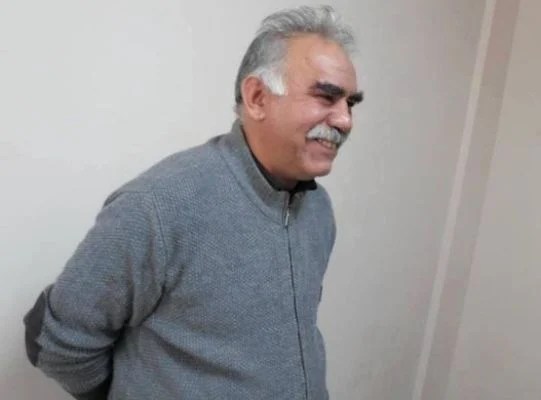
Abdullah Öcalan, the imprisoned leader of the Kurdistan Workers’ Party (PKK), recently issued a statement calling for the disarmament and dissolution of the Party. This statement has sparked significant international attention and raised questions about the motivation behind such a declaration. While Öcalan’s message does not necessarily signify the definitive dissolution of the PKK, it clearly indicates that, after decades of imprisonment, he has developed a new understanding of the political developments in the region and the world. He proposes a “new solution” for the realization of the Kurdish people’s democratic rights.
To evaluate both the PKK and Öcalan’s message, it is important to delve deeper into the core issue of national rights in multinational countries during the age of imperialism, examining the roots of past failures and political setbacks. Undoubtedly, the dissolution of the PKK would mark the beginning of a new era for the various Kurdish forces in the region. To gain a more comprehensive understanding of this subject, we will address several key points:
1. In 1977, Öcalan published a manifesto titled “The National Path to the Kurdish Revolution.” This document became known as the roadmap for the PKK. One year later, the party was founded in Diyarbakır, a city in southeastern Turkey with a predominantly Kurdish population, and Öcalan was chosen as its leader. In its early years, the PKK carried out armed operations in various forms against the repressive and reactionary military forces of the Turkish government.
In 1979, amidst social unrest, Abdullah Öcalan, along with some of his supporters, traveled to Syria, where he began training guerrilla forces that would eventually form the core of the PKK. From the outset of his activism, Öcalan sought the unity of all Kurds and the creation of a Greater Kurdistan in the region. His ideology emphasized the “right of nations to self-determination, including secession.”
In the 1990s, Öcalan began developing a vision for the future of Kurdish society, which he referred to as “Democratic Modernity.” In his articles and books, he introduced concepts such as “shared homeland,” “democratic republic,” “democratic autonomy,” and “democratic confederation.” He fully abandoned the idea of establishing a nation-state and instead advocated for a negotiated agreement to grant Kurdish autonomy within Turkey.
In 1998, Turkey intensified its pressure on Syria to expel Abdullah Öcalan, who had been living in exile there for nearly two decades. Under this pressure, on October 9, 1998, Öcalan was expelled from Syria and sought refuge in countries such as Greece, Russia, Italy, and Tajikistan. On February 15, 1999, he was captured in a covert operation at Nairobi’s airport in Kenya and subsequently transferred to Turkey.
2. After some contradictory reports and a period of uncertainty, Abdullah Öcalan’s statement titled “Call for Peace and a Democratic Society” was finally published. Part of the statement reads:
“In the 20th century, the most turbulent period in history in terms of violence, marked by the World Wars and the Cold War, the denial of the Kurdish reality, and widespread restrictions on freedoms—especially freedom of expression—occurred. Our organization was deeply influenced by the socialist realist system of that era in terms of theory, program, strategy, and tactics. However, with the collapse of ‘actually existing socialism’ in the 1990s due to internal problems, coupled with the increase in freedom of expression and the reduction of identity denial in the country, the PKK entered a crisis of meaning and excessive repetition. Therefore, like many similar organizations, its time has come to an end, and its dissolution has become necessary.”
In this message, Öcalan addresses the “historical relations between Kurds and Turks” and emphasizes the need to foster brotherhood between the two peoples, promising the revival of new relations. He writes:
“Kurds and Turks, over more than a thousand years of shared history, have always recognized the necessity of a voluntary union to preserve their existence and resist hegemonic powers. However, in the last two hundred years, capitalist modernity has sought to undermine this union. The forces influenced by this process, especially those shaped by their class foundations, have accepted this goal and moved toward it. The one-dimensional interpretation of republicanism has accelerated this process. Today, as these historical relations have reached a fragile stage, it is essential that we redefine these relations based on the spirit of brotherhood, while taking religious beliefs into account.”
In his message, Öcalan ultimately addresses the “necessity of a democratic society” and the democratic rights of the Kurdish people within the framework of Turkey’s territorial integrity and in relation to the other peoples of the region. He asserts:
“Solutions such as a separate nation-state, federalism, autonomy, and others are incapable of providing a solution to historical sociology. Respect for identities, freedom of expression, and the democratic organization of all social groups can only be achieved within the framework of a democratic society and political system.”
According to him,
“The second century of the Republic of Turkey can only achieve sustainability and brotherly coexistence if it is rooted in democracy. There is no path, nor can there be, other than the democratic path to seek and realize such a system. Democratic agreement is the only viable method. The era of peace and a democratic society requires a language that aligns with this reality.”
3. Given Abdullah Öcalan’s statement and the historical failure of the PKK in its struggle against the central government of Turkey, along with the unfulfilled national rights of the Kurdish people, the theoretical reasons and deviations of the party can be outlined. Once again, it is essential to emphasize the communist principles that, in the age of imperialism, the resolution of the Kurdish question in Turkey, Syria, Iraq, and Iran—despite differing developments, the diversity of official languages, and the various forms of anti-democratic governments—should not be considered separate or isolated from the broader strategic politics of imperialism. On the contrary, this struggle must be specifically viewed as part of the larger revolutionary anti-imperialist struggle, within the context of the growing contradictions in the world and the global conflict between revolution and counter-revolution.
National chauvinism, political ignorance, and the shortsightedness of Kurdish leaders, who have failed to learn from numerous similar experiences, have led to the unfortunate situation where Kurds have continually been manipulated by reactionary and imperialist forces. In this way, they have become tools used to undermine the shared revolutionary struggle of the peoples of the region.
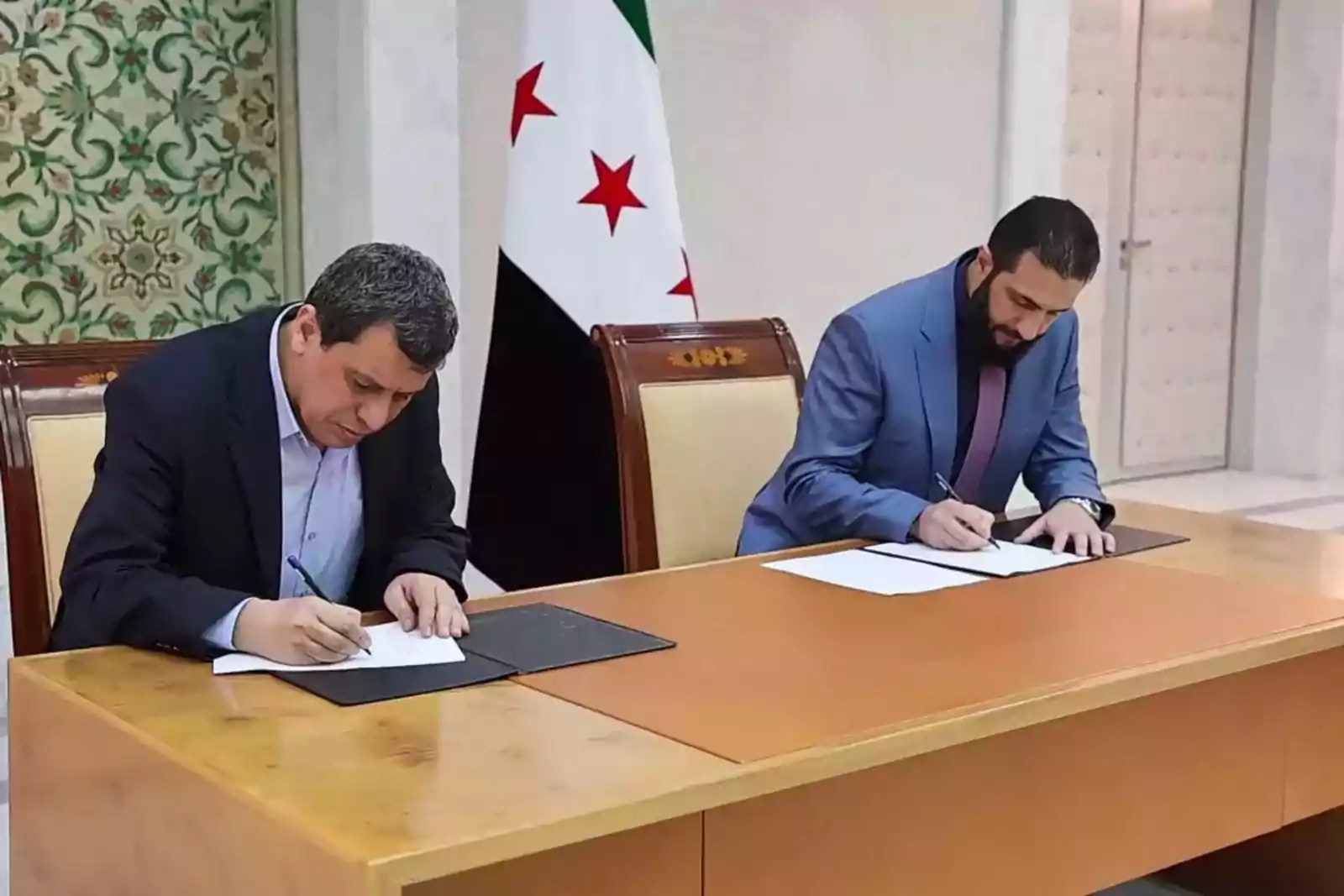
4. The developments and events of recent decades in Turkey, Abdullah Öcalan’s statement calling for the disarmament and dissolution of the PKK, and the eventual policy of integrating Syrian Kurds (“Rojava”) into the terrorist and neo-colonial Daesh (ISIS) regime led by Al-Jolani—created by Turkey and supported by the U.S.—show that in the age of imperialism, which shapes the current political landscape of the world, it is misguided to address the national question and its resolution today separately, without considering the domination and interests of imperialism. The solution to the national question, since the 20th century and following the October Socialist Revolution, must be understood in the context of the anti-imperialist struggle and can only be assessed within this framework, with its revolutionary quality determined by this context.
Supporting any national chauvinistic and separatist movement that serves imperialism and Zionism is a reactionary and counter-revolutionary act. To serve socialism and advance the class struggle, communists must relentlessly fight against such movements. The lived and tragic experiences of Iraqi and Syrian Kurdistan are before us. We must expose these reactionary, imperialist-Zionist ethnic movements and avoid considerations of “friendship, ethnicity, and lending a hand.” The cooperation and relationship of Kurdish national chauvinist movements with the Zionist regime, along with their shameless silence regarding the genocide in Gaza, further illustrate the reactionary and degenerate nature of these movements, which have separated themselves from other peoples and chosen the path of division and complicity with imperialism and colonial powers.
The Theoretical Aspect of the National Question:
Lenin, in his analyses concerning the right of nations to self-determination during the era of colonial domination, had a heated debate with the national chauvinists of the Second International. These chauvinists supported the imperialist European countries’ dominance over their colonies, viewing the colonization of nations as the natural right of their own country and being essentially unwilling to recognize the right of self-determination for other nations.
At the heart of this discussion lies a bourgeois concept—the realization of democracy in a country, or the acceptance of the bourgeois notion of democracy. It goes without saying that this right is a bourgeois concept, expressing the realization of democracy in a country through the lens of bourgeois democracy. However, for communists, democracy is not an absolute, pure, “inviolable,” non-class, or sacred concept. Democracy is always a social and class concept, and its approach must be grounded in the interests of class struggle.
For this reason, the dictatorship of the proletariat is seen as the most democratic form of government for the majority of the working masses. In his discussions on the right of nations to self-determination, written over various periods, Lenin points out two key points:
First: Lenin’s first discussion in his work “The Right of Nations to Self-Determination” concerns those who fundamentally do not recognize this right. This discussion is rooted in a time when nation-states were emerging and seeking their independence. In the context of the debates about the right of nations to self-determination, which trace back to the era of bourgeois-democratic revolutions, Lenin argues that those who fundamentally deny this right and support the interests of the oppressor nation cannot be considered social democrats. They are, in fact, colonizers and anti-democratic.
Recognizing the right to self-determination and accepting that all nations in the world have equal rights is crucial. The condition for sincerity in this recognition is the acceptance of the right to secession for all nations. This distinction must be drawn between democratic and socialist forces on one hand, and anti-democratic and colonial forces on the other—between the interests of the oppressor and the oppressed nations. Those who fundamentally refuse to recognize this right, as many did in the Second International, cannot claim to be social democrats.
Of course, there were individuals who did not fundamentally oppose this right but did not accept the right to secession. Recognizing the right of nations to self-determination naturally implies the acceptance of the establishment of separate states, which includes the right to secession. However, Lenin never gave the bourgeoisie a blank check. In response to opponents, he emphasized that recognizing the right to self-determination of nations does not automatically mean supporting the right to secession under all conditions. The decision of communists to support the secession of a particular nation, despite recognizing its right, depends on a specific analysis of the conditions at the time and is always based on the interests of the class struggle.
Communists recognize the right of nations to self-determination. Anyone who fundamentally denies this right is merely defending the national yoke. Lenin’s view on this issue refers to the disputes he had before World War I and the Great October Socialist Revolution with the leaders of the Second International, who did not recognize the right of colonized nations to self-determination. They did not believe that the fate of the proletariat’s struggles in imperialist countries was linked to the struggles for liberation in colonized nations. For this reason, Leninism upheld the slogan: “Workers and Oppressed Peoples of the World, Unite.”
Therefore, from the perspective of communists, during the era of imperialism, national separation cannot be supported unless it serves the interests of the proletariat. The partition of Yugoslavia, Sudan, Libya, Iraq, Syria, Nigeria, Congo, and others serves the strategic interests of imperialism by dividing nations and asserting control over them. Contemporary history still remembers the divisions of Vietnam and Korea. The “divide and rule” policy, which aims to strip these countries of their ability to exist independently and survive according to their own will, cannot be endorsed by communists.
When the Great October Socialist Revolution succeeded, imperialist policy aimed to unite fragmented and divided countries unable to resist the influence of communism, strengthen their central governments, and bolster them against socialism. The coup by Reza Khan (the father of the Shah) in Iran, the suppression of Sheikh Khazal (a secessionist in Khuzestan, Iran), and the establishment of a central government in Iraq under King Faisal must be viewed in this context and analyzed accordingly. Now that the Soviet Union has collapsed, the socialist rival power has been destroyed, and the imperialist China can no longer play the global role the Soviet Union once did, the division and fragmentation of countries for imperialist purposes has become part of their agenda. It is much easier to subjugate several weak countries, such as Macedonia, Montenegro, Bosnia and Herzegovina, Croatia, Kosovo, and Serbia, than a powerful country like Yugoslavia. It is also worth noting that the breakaway regions of the former Yugoslavia are not truly independent nations, and their existence is, at best, tenuous.
Comrade Stalin, in describing Lenin’s theories and the Marxist-Leninist understanding of the national question during imperialism, wrote:
It was formerly the “accepted” idea that the only method of liberating the oppressed peoples is the method of bourgeois nationalism, the method of nations drawing apart from one another, the method of disuniting nations, the method of intensifying national enmity among the labouring masses of the various nations. That legend must now be regarded as refuted. One of the most important results of the October Revolution is that it dealt that legend a mortal blow, by demonstrating in practice the possibility and expediency of the proletarian, internationalist method of liberating the oppressed peoples, as the only correct method; by demonstrating in practice the possibility and expediency of a fraternal union of the workers and peasants of the most diverse nations based on the principles of voluntariness and internationalism. The existence of the Union of Soviet Socialist Republics, which is the prototype of the future integration of the working people of all countries into a single world economic system, cannot but serve as direct proof of this.
The International Aspect of the October Revolution / Leninism
Second: Lenin’s next discussion is not one in which he debates anti-democrats, anti-socialists, or colonial supporters in Europe. Instead, his focus is on the conditions of separation. Here, the second boundary is drawn—the boundary with the bourgeoisie of the oppressed nations. Lenin never gave a blank check to the bourgeoisie of the oppressed nations. Communists set conditions for supporting separation, meaning that the separation must serve the interests of the class struggle and not undermine the unity and interests of the proletariat. Communists are never allies of any side in a bourgeois conflict. They do not sit idly by on the sidelines, observing the struggle of the bourgeoisie of different nations with neutrality or impartiality.
The proletariat always conditionally supports the bourgeoisie’s struggle, but this support is contingent upon the struggle having democratic and anti-oppression content.
Regarding the policy of the proletariat in the oppressed nation, which is exploited as wage labor in any capitalist system, Lenin states that for this proletariat, it does not matter which bourgeoisie exploits them:
“In any case the hired worker will be an object of exploitation. Successful struggle against exploitation requires that the proletariat be free of nationalism, and be absolutely neutral, so to speak, in the fight for supremacy that is going on among the bourgeoisie of the various nations. If the proletariat of any one nation gives the slightest support to the privileges of its “own” national bourgeoisie, that will inevitably rouse distrust among the proletariat of another nation; it will weaken the international class solidarity of the workers and divide them, to the delight of the bourgeoisie. Repudiation of the right to self-determination or to secession inevitably means, in practice, support for the privileges of the dominant nation.” (The Right of Nations to Self-Determination, Lenin.)
“Thus, the proletariat of the oppressor nation must recognize the right of nations to self-determination and fight against the national chauvinism of the oppressor nation. Conversely, the proletariat of the oppressed nation must fight against the national chauvinism of their own nation so that the democratic unity of the proletariat of all nations is strengthened and proletarian internationalism shines over bourgeois nationalism.”
“What every bourgeoisie is out for in the national question is either privileges for its own nation, or exceptional advantages for it; this is called being “practical”. The proletariat is opposed to all privileges, to all exclusiveness. To demand that it should be “practical” means following the lead of the bourgeoisie, falling into opportunism.
“The demand for a “yes” or “no” reply to the question of secession in the case of every nation may seem a very “practical” one. In reality it is absurd; it is metaphysical in theory, while in practice it leads to subordinating the proletariat to the bourgeoisie’s policy. The bourgeoisie always places its national demands in the forefront, and does so in categorical fashion. With the proletariat, however, these demands are subordinated to the interests of the class struggle. Theoretically, you cannot say in advance whether the bourgeois-democratic revolution will end in a given nation seceding from another nation, or in its equality with the latter; in either case, the important thing for the proletariat is to ensure the development of its class. For the bourgeoisie it is important to hamper this development by pushing the aims of its “own” nation before those of the proletariat. That is why the proletariat confines itself, so to speak, to the negative demand for recognition of the right to self-determination, without giving guarantees to any nation, and without undertaking to give anything at the expense of another nation.”
Lenin clearly critiques the nationalism of the oppressed nation and conditions its support. According to Lenin, the democratic and anti-oppression aspects of this struggle are of particular importance for communists. Therefore, he defends the nationalism of the oppressed nation only conditionally.
Lenin clarifies that the struggle of the oppressed nation against the oppressor should not be evaluated solely within the framework of a bourgeois struggle. Instead, it must be examined in terms of how this struggle contributes to democracy and combats oppression. This content is what strengthens the proletarian struggle within the oppressed nation. The bourgeoisie of the oppressed nation must deepen and expand the democratic and anti-oppression nature of this struggle in society. Otherwise, communists would be supporting the demands of the bourgeoisie without considering the future implications of this struggle for the proletariat. In such a case, communists would merely play a secondary and propaganda role for the bourgeoisie, acting as its fifth column.
Conclusion:
After several decades in prison, Abdullah Öcalan announced the disarmament and eventual dissolution of the “PKK” with a statement emphasizing the necessity of a democratic society and the democratic rights of the Kurds within the territorial integrity of Turkey, as well as in connection with the other peoples of this geography. He rejected solutions such as separate nation-states and federalism. This marks a correct starting point for the realization of democratic rights and national language. However, as far as we can tell, he did not address the unity of the peoples of the region or their joint struggle against imperialism, Zionism, and Israel’s crimes in Palestine, nor did he express solidarity with the people of Gaza. He remained silent on these issues.
U.S. imperialism, as the largest supporter of the Kurdish forces in Syria, aimed to weaken the Bashar al-Assad government through this means. However, in 2019, Donald Trump decided to withdraw U.S. troops from Syria, which in turn gave Turkey the green light to suppress the Kurds. With the fall of Bashar al-Assad’s regime, Washington has no intention of preventing Turkish military operations against the Syrian Democratic Forces (SDF). Additionally, due to its strong relations with Baghdad, the U.S. was one of the countries that did not recognize the illegal referendum for the independence of the Kurdistan Region of Iraq.
All of these points clearly demonstrate that no country in the Middle East has a stable interest in supporting the Kurdish armed forces. The reality is that all regional countries, based on their logic of expediency, view Kurdish armed groups as tools to strengthen their positions and weaken rivals, rather than as allies to be supported against future threats. The numerous Kurdish militias in the region lack the weight of a state and cannot play a role like that in creating permanent alliances. As a result, regional governments only approach them to achieve short-term goals and will easily abandon their support once the situation changes.
This is the tragic fate of the national chauvinist Kurds, whose movement, tinged with “leftist” and “Soviet” rhetoric, has been led by corrupt and deceitful leaders.
When Syria, under Bashar al-Assad’s regime, was attacked by the forces of global reaction, these individuals refused to support the territorial integrity and national sovereignty of Syria as a sovereign country and member of the United Nations. For them, the invasion of Syria began only when Afrin, not Syria as a whole, was attacked. They shamelessly sided with the occupying U.S. military and supported the occupation of Syria, as it served their group’s interests. For them, the occupation of the Golan Heights by Zionism is not considered an occupation; the illegal presence of the U.S. in Syria, which steals Syria’s oil from Arab-majority occupied areas, is not viewed as an occupation; yet, the brutal Turkish invasion of Syria is condemned, precisely because it targets Kurdish regions.
The logic of the national chauvinist Kurds is solely to “pull my own blanket out of the water.” For them, it doesn’t matter what happens to Syria. Isn’t it shameful that when 50 American soldiers were ordered by their commander to leave Syrian soil, these national chauvinist Kurds took to the streets, throwing stones at them and demanding that they not betray the Kurds? They insisted that the U.S. should continue occupying Syria for the sake of Kurdish interests, sacrificing the interests of the Syrian people at the altar of Kurdish national chauvinism?
The bitter, tested experience and betrayal by the Kurdish leaders of Iraq and Iran have been repeated by the Kurdish leaders of Syria, who still have not learned from it. They continue to seek the approval of Zionism and imperialism in the region, hoping to create a “Greater Kurdistan” as a second Israel.
The only path to the liberation of the Kurdish people from national oppression in any given country is through cooperation and unity in struggle with the other peoples of those countries. This must be done within a unified working-class party, through a united front of the people, and in common political and social organizations that are non-ethnic, all while opposing the ruling reactionary forces. The foundation of this struggle must contain an anti-imperialist and anti-Zionist position. Without this revolutionary content, which is essential for building a democratic and free country based on the power of the working people, the victory of the Kurdish people, or any other peoples in Iran, Syria, Turkey, or Iraq, is not possible.
Turning to imperialism and Zionism and collaborating with them is a betrayal of the peoples of the region and a betrayal of the Kurds themselves. We must fight to ensure that any attempt to establish a second Israel in the region is defeated. One Israel is already too many.
Categories: History, International, Syria
Related Articles
-
 International Conference of Marxist Leninist Parties and Organizations: “Let us go onto the streets on May Day with a louder voice against exploitation and imperialist aggression!”
-
 Statement of the Workers Communist Party of France: No to the Trivialization of French Military Interventions
-
 Statement of the Labour Party (Turkey): We Condemn the Attacks on Syria Initiated by the US, Britain, and France
-
 Statement of the Revolutionary Youth of Ecuador: Imperialism Sows Death in Syria. Solidarity with the Syrian People!
 The Red Phoenix