
Thomas K. | Red Phoenix correspondent | Ohio–
If corporations are allowed to continue their streak of over consumption and contamination of our water supplies, we will see dramatic water shortages in the United States within the next decade, and potentially an end to clean water access across the world by 2040. We have the technology and labor power to turn these figures around and we have the ability to provide clean drinking water to 100% of people living in the U.S. However, corporations and the political leaders who sympathize with them have left the infrastructure to our means of life poisoned or crumbling with no intent on fixing the problem. The de-privatization of this vital infrastructure would allow experts in their respective fields to use their abilities to serve the people. This will lead to the development, maintenance, and expansion of clean energy, transportation, water and sewer, telecommunication, and emergency systems. As a union plumber my expertise lies in the water and sewer systems, and that will be the focus of this piece.
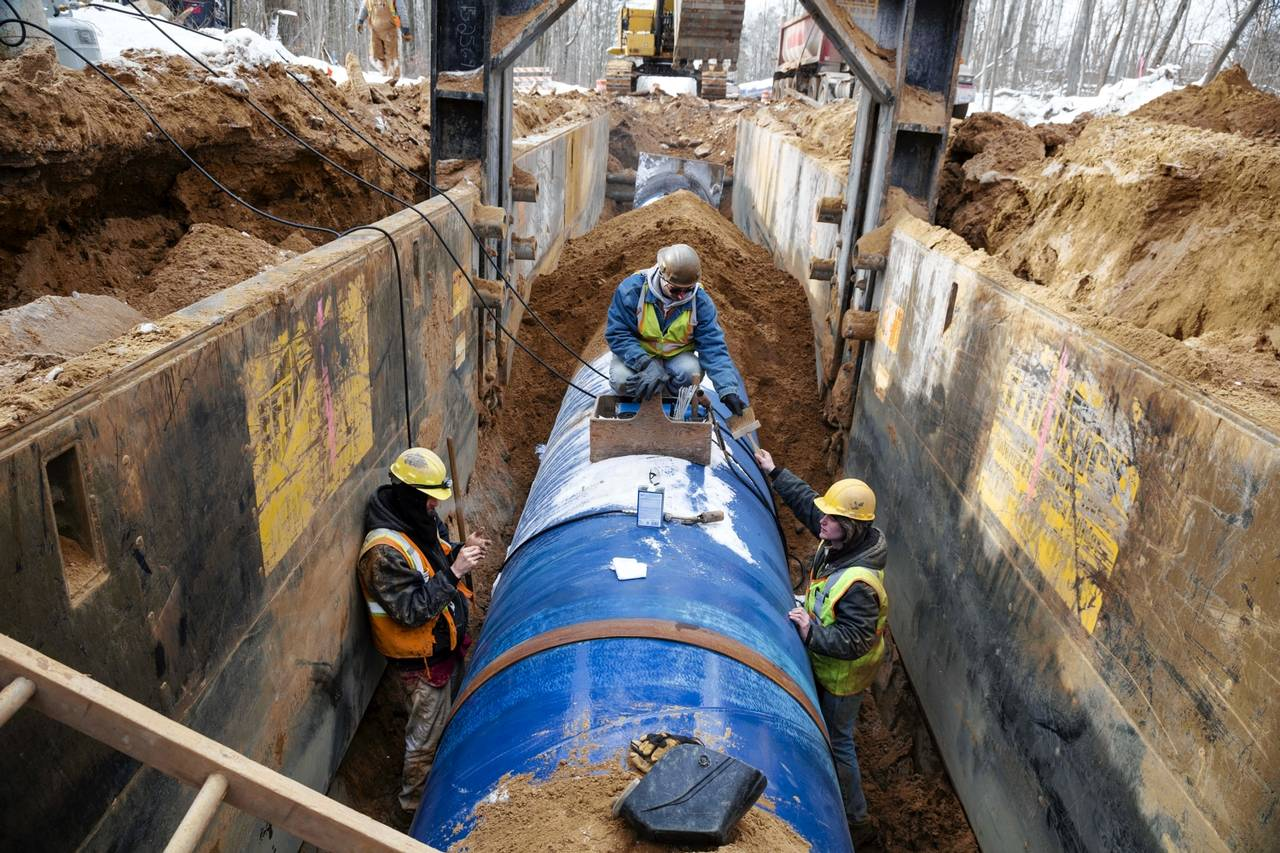
Plumbing systems have existed since the beginning of recorded history. The first accounts of drainage systems are depictions of large runoffs and ditches dug for the sake of protecting villages and fields from flood waters. The necessity to defend against flooding, and to have access to clean water, has led the plumber to be a staple of society since the very beginning of civilization. According to the Bureau of Labor Statistics, as of 2023 there are approximately 473,400 plumbers, pipefitters, and steamfitters in the United States. The labor force, resources, and skills of these trades should be available to provide clean and safe drinking water to the entire population of our country. However, due to private industry constraints, “an estimated 2.2 million Americans live in homes without running water or basic plumbing,” according to a CDC study conducted in 2012.
Ancient Rome is where we truly begin to see the creation of “plumbing systems,” systems where wastewater is carried out and clean water is carried in. This is also where we begin to recognize “The Plumber” in history, deriving from the word plumbarius, a person who works with lead. The Romans developed lead pipes used to carry both hot and cold water to bathhouses. The fault however with these ancient systems is there wasn’t much of a concern for what became of the waste once it had gone out of sight. This created issues with access to clean water supplies and, coupled with an over population in these cities due to poor social conditions, people often fell ill or died due to water-borne diseases.
The concept of clean water wasn’t really a mainstream discussion in the western world until the mid-1800s when it was discovered that cholera outbreaks were linked to contaminated water supplies. The Health of Towns Association pushed for the 1848 Public Health Act to improve plumbing and drainage systems and to establish the provision of sewers. A little under a decade later the first integrated sewer system was in the U.S. was built in Chicago in order to keep pollutants from draining into Lake Michigan, the city’s primary water source. However it still wasn’t until the 1930s that we saw nationwide plumbing codes and standards come to fruition.
As an apprentice plumber in the United States, I was told that my first loyalty in this job should be to the general population. As plumbers our trade is one of a first line defense to the health of the people in our communities. Regardless of class everyone will need the services of a plumber, making it one of the few “equalizers” in society. A broken pipe or contaminated water source creates a crisis for all people, but for many a solution is unattainable, forcing them to live in squalor. People who do not have access to any clean water are forced to purchase bottled water, which can cost over $1000 per household per year. Lack of access to clean water causes higher healthcare costs and lower household earnings. When local, state, and federal governments neglect crumbling infrastructure in low-income areas — while granting corporations favorable deals to build private infrastructure — their disregard for the working class couldn’t be clearer.
Further attacks on regulatory bodies, by the Department of Government Efficiency, has led to a halting of funds from the EPA to at-risk communities. For example, in Clarksburg, West Virginia, funding for testing blood and water for lead pollutants has been cut. These cuts to the EPA will also lead to dangerous fracking, drilling, and pipeline practices across the United States. Unmanaged oil and gas drilling has caused contamination of drinking supplies time and time again, as seen in Pennsylvania, Ohio, Colorado, New York, and West Virginia.
The Appalachian region is constantly plagued by contamination from unsafe mining practices. In August 2022, in Jackson, Mississippi, a flood rendered their plumbing infrastructure useless due to gross negligence by authorities (AHJ), leaving 150,000 people without clean water. The people in the area are still fighting for solutions to problems that failed to be addressed by their local and state governments.
Plumbers and plumbing inspectors across the nation have warned their municipalities that the changes being made, as plumbing fixtures and systems evolve, will place constraints on both sewer systems and water supplies.
Though clean water access remains a problem in the United States, it’s critical to mention that this is not a uniquely “American” issue; this is a crisis that plagues the world. Africa as a continent is constantly afflicted by sanitation and water issues. Some will have you believe that this is due to the “harsh landscape,” and while this may have been true hundreds of years ago, it is no longer the case. Rather, the root of the problem is the insatiable thirst for profit by the capitalists and the governments that do their bidding, while risking the lives of the masses. We live in an age where in America we can build thousands upon thousands of miles of pipeline underneath our homes, as the corporate owners pilfer our natural resources and sell them for profit, lining their pockets, while some of us can’t even wash our clothes.
Along rivers we have built multi-billion dollar oil refining and distillation plants. We have the technology, we have the skills, we have the knowledge to build infrastructure to bring water to everyone in this world. We can stop the development of oil and gas pipelines and start developing wastewater treatment plants and facilities to supply clean water. As corporate demands continue to increase, and as sustainable energy options are ignored, the crisis of water continues to expand globally. Plumbing could be a public safeguard, but when profit dictates its distribution, the trade becomes yet another tool of inequality, servicing those who can pay while others wait for solutions that never come.
Categories: Economy, Environment, Government, U.S. News
Related Articles
-
 How Billionaire ‘Philanthropy’ Is Fueling Inequality and Helping To Destroy the Country
-
 Editorial: The Wonderful American World of Informers and Agents Provocateurs
-
 “Environmental genocide”: Native Americans quit talks over Keystone XL pipeline
-
 Romney Refuses To Comment On Plans To Eliminate FEMA, 14 Times
 The Red Phoenix