

Allison P. / Red Phoenix international correspondent.
Jan. 17, 1947 — The first transorbital prefrontal lobotomy is performed.
Dec. 10, 1949 — António Egas Moniz is awarded the Nobel Prize in Medicine for introducing the infamous frontal lobotomy for refractory cases of psychosis.
Dec. 9, 1950 — Less than one year later, the USSR becomes the first nation to ban the lobotomy as cruel and inhumane. The Soviet Union is rarely given credit for this step toward humane treatment of the mentally ill, a step which the US and many western European nations have never taken. The lobotomy has left in its wake the irreparable destruction of tens of thousands of people, and despite first being banned 73 years ago today, its story is not over.
The transorbital prefrontal lobotomy performed in 1947 was not the first type of lobotomy, however it was the one to most capture the public’s imagination as the “ice-pick lobotomy.” The first true lobotomy was performed in 1936, however the history of psychosurgery (the use of surgical intervention to treat mental illless) extends back to the 1880s. Egas Moniz is responsible for bringing psychosurgery into the mainstream, even coining the term. He would eventually invent the leucotomy in 1935, so named for the cutting of the white matter. In 1936, Walter Freeman and James Watts evolved this mutilation into the lobotomy, in which a probe would be used to sever connections between the prefrontal cortex and structures deeper within the brain. A lobotomy required drilling a burr hole into the side of the skull which was required to be performed by a neurosurgeon in a surgical theater under general anesthetic. This was a particularly expensive endeavor, and so in order to save money for the poorly funded mental health system, Freeman went on to develop a new method which did not require advanced training or equipment: the trans-orbital lobotomy. In this procedure, an instrument called an orbitoclast is hammered through the eye socket to access the brain. The orbitoclast bears a resemblance to an ice pick, and so came the name, “ice-pick lobotomy.”
The lobotomy was initially hailed as a miracle treatment, and intended to reduce agitation and symptoms in people with a variety of medical conditions including obsessive-compulsive disorder and schizophrenia. While the procedure did result in an improvement in symptoms for some patients, for many there were severe detrimental effects, including apathy, passivity, poor initiative, poor ability to communicate, diminished cognitive function, and reduction in emotions and personality. Many people were left completely disabled and unable to care for themselves. Of those who received the lobotomy, 15% were killed as a result of the surgery. Roughly 50,000 people in the US were lobotomized, including schizophrenic children as young as four years old (who were likely autistic, but schizophrenia and autism had not yet been diagnostically separated). The use of the lobotomy was not evenly applied to patients with similar symptoms and diagnoses — roughly 60% of lobotomy victims in the US were women and many of the male victims were gay.
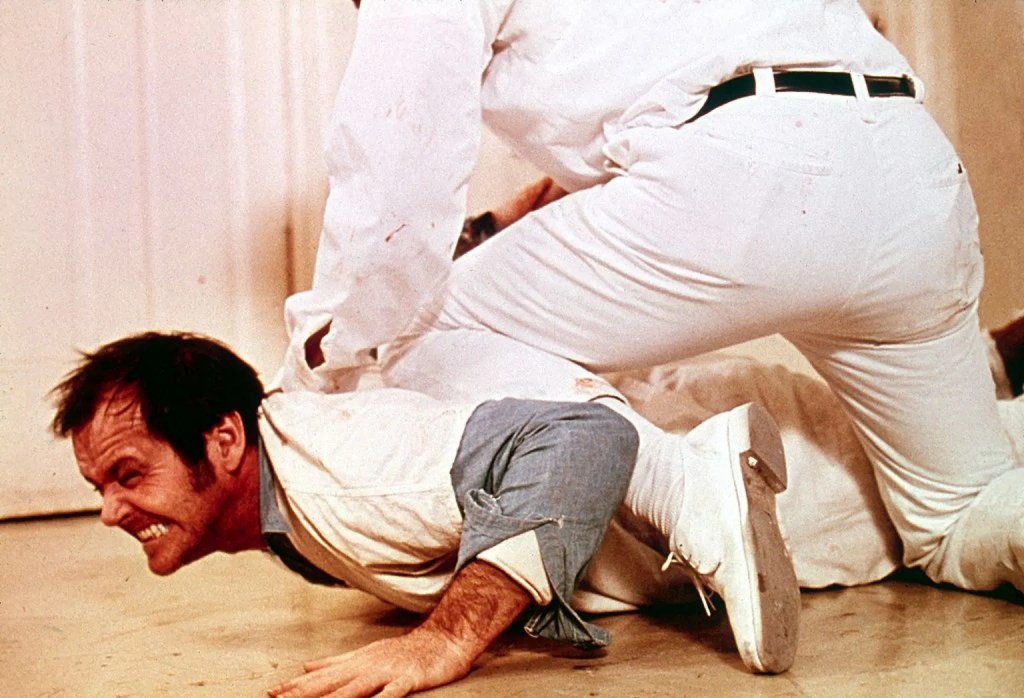
Although the intimate details of the lobotomy are not well understood by the public, the horror of the procedure is well known. There have been a number of high profile cases of the use of the lobotomy, most famously Rosemary Kennedy. It is also not uncommonly depicted in film and media to the point that TV-Tropes has a page on the topic which notes roughly 175 examples of lobotomy in media, including the Mad Scientist attempting to lobotomize Gonzo in “Muppets from Space,” Max Cohen lobotomizing himself in the film “Pi,” Julia receiving a lobotomy at the end of George Orwell’s “1984,” and perhaps most famously, the ending scene of the 1975 film, “One Flew Over the Cuckoo’s Nest.” The most famous recent depiction occurs in the animated series “Bojack Horseman,” in which Honey Sugarman, the main character’s grandmother, is given a lobotomy after being unable to process the grief of losing her son in the war, thus leading to the generational trauma that would define the title character’s life. One thing of note is that most depictions of lobotomies include a surgical scar on the forehead, indicating a trans-cranial lobotomy rather than a trans-orbital lobotomy, even though the latter was more common.
The ubiquity of the lobotomy and its depiction in mental health settings can often provoke fear and anxiety in mentally ill people when they are hospitalized. The lobotomy’s history for use in dealing with agitation and difficult patients, and particularly the depiction of the lobotomy in “One Flew Over the Cuckoo’s Nest,” reinforces this fear. Many patients who have been through the mental healthcare system understand that “agitation” in a medical setting is often applied to patients who are deemed uncooperative or disobedient, and is further used as an excuse for inhumane treatments that violate patient consent.
Lobotomies and psychosurgery in general are quite rare nowadays. Instead pharmacological “solutions” are the standard for treatment of mental illnesses. In 1954 a new medicine called Thorazine, the first antipsychotic, was invented. Initially marketed as a “chemical lobotomy,” it was able to produce similar effects to a lobotomy without surgery, and led to the development of the first generation of antipsychotics (perphenazine, loxapine, fluphenazine, and haloperidol). The second generation of antipsychotics, also called atypical antipsychotics or serotonin-dopamine antagonists, were largely developed during the 1970s and includes risperidone, ziprasidone, clozapine and quetiapine. Today, the second-generation medications are more commonly used due to their lower risk of extra-motor symptoms. Third generation antipsychotics work via a slightly different mechanic, activating the D2 dopamine receptor instead suppressing it. Aripiprazole is the primary third generation antipsychotic. These medicines now form the main vector of treatment for severe mental illnesses.
Psychiatric medications do enable a higher quality of life for many patients, but their rate of success rate is limited and they can have significant side effects. The most common side effects include lethargy, weight gain, decreased ability to feel joy, decreased cognitive function, and in long term use cases, muscle control disorders like tardive dyskinesia and worsening of psychological symptoms. While these medicines are not recommended for long term use, in practice it is so common for providers to continue prescribing their patients beyond the recommended time frame, that there is little available research on reduction of antipsychotic use. Because of the lack of research, doctors can be hesitant to even attempt to assist in tapering their patients off of these medications. There is evidence to suggest that some of the late-stage symptoms of schizophrenia in particular are not a result of the disease itself but the result of long term use of the medications prescribed to treat it. In developing countries without access to antipsychotics, positive outcomes are significantly higher than in developed countries. Despite the frequent use of antipsychotics, the success rate of treatment is quite low, with only 10% of schizophrenic people functioning well enough to maintain employment.
In the end it is ultimately the mechanisms of capitalism which created the horror of the lobotomy and the conditions under which many mentally ill people struggle: the profit motive in healthcare services, and in research and development of treatments; and the absence of social services to improve quality of life for people living with medical and mental conditions.
Categories: Health Care, History, U.S. News
 North Carolina agrees to compensate sterilization victims for 45-year eugenics program
  ‘Crack baby’ study ends with unexpected but clear result
  Analyzing Barack Obama
  Celebrate International Workers’ Day 2013!
  The Red Phoenix