
Allison P. / Red Phoenix international correspondent.
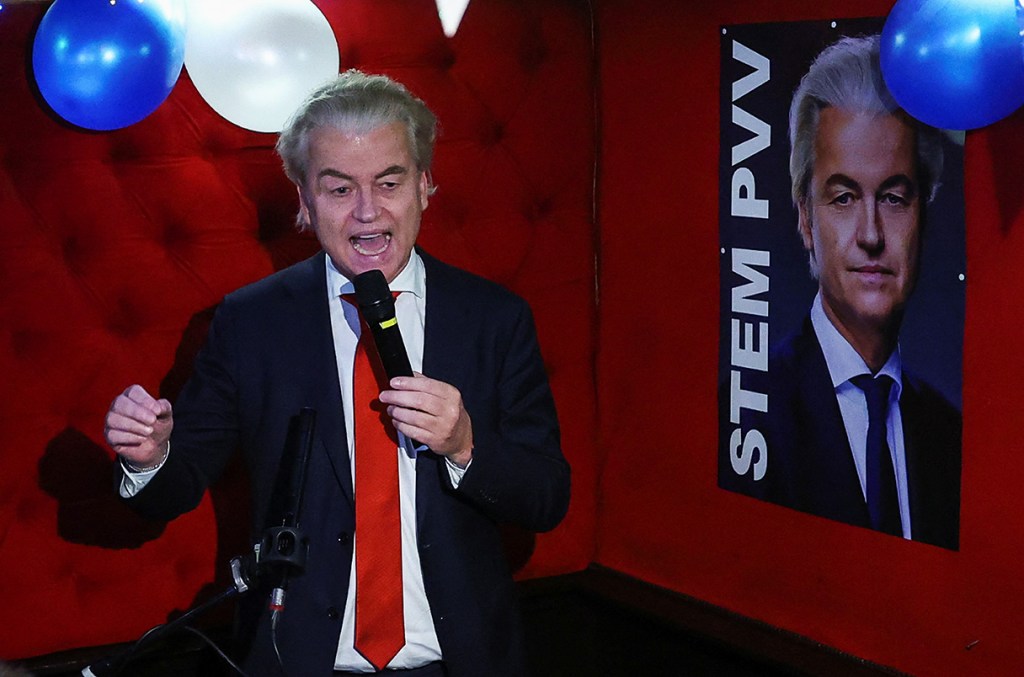
On Nov. 22, the far-right Party for Freedom (PVV) won the plurality of the vote in the Dutch election. This was not an inevitable result of history, but the result of deliberate acts by previous liberal governments to put profits above people.
The PVV is expected to take 37 of the 150 seats in the House of Representatives in the Dutch Parliament, winning over 25% of the vote. The PVV is a far-right populist party led by Geert Wilders, who has been described as the Dutch Donald Trump. The party’s main platform is primarily focused on anti-immigration, Islamophobia, Euroskepticism, and anti-environmentalism. The PVV wishes to enact a ban on immigration from Muslim countries, restrict immigration from within the EU, and disallow MPs carrying dual citizenship. They propose the banning of construction of new mosques and the banning of the Quran. They also propose a binding referendum to leave the EU and reduce funding to the organization and a return to the Dutch guilder as currency. They also propose the expansion of more nuclear and “clean coal” plants against the expansion of more windmills.
Wilders softened his rhetoric in the last days of the campaign and the VVD (Peoples Party for Freedom and Democracy, the leading party of the previous government) suggested they may be willing to coalition with the PVV, though not with Wilders as prime minister. These two factors likely influenced the success of the PVV in the final days. Does that mean that Wilders or his party will be the next Prime Minister of the Netherlands? Well, no, not necessarily. Compared to the American system with its winner take all approach, the Dutch Parliament is defined by the construction of coalitions. The PVV is among the most extreme parties in the government, and forming a coalition will be a difficult task. Previous governments have always ruled out forming a coalition with the PVV; and the other largest parties, NSC (New Social Contract), GL-PvdA (Green Left – Party for the Worker), and the VVD, have previously ruled out such a coalition. Although it is customary for the largest party to hold the Prime Minister and be part of the ruling coalition, minority governments without the largest party would not be unprecedented. In either case however, the formation of a government will be a long and fraught process, the previous government taking nearly nine months to form. The coalition structure of the Dutch government will ultimately act as a stabilizing influence and force the PVV to significantly curtail its most extreme policies if it wishes to join the ruling coalition.
This does ask the question, how did we get here? Among the PVV, NSC, and the VVD, discussions of immigration have been a significant focus point of the election. It was a very common talking point to reduce the level of immigration into the country. Pieter Omtzigt, the leader of the NSC, repeatedly proposed limiting net immigration to 50,000 per year down from the 220,000 people of last year (a number heavily inflated by the continuing inter-imperialist conflict in Ukraine). The Netherlands faces a number of significant problems in availability of healthcare and education, however the defining problem of the Netherlands right now is the housing shortage. The estimated shortage of homes is roughly 320,000. This has led to extremely high rents, particularly in the Randstad, and difficulty for citizens and students to find housing.
Anti-immigrant sentiment has been on the rise in the country. It is not uncommon in online Dutch spaces to see anger over refugees and immigrants, particularly those from the Middle East and North Africa. To some extent this is intuitive: more immigrants means more people who need homes and services. And because of the Netherlands’ international obligations many refugees are placed into housing with the help of the government while citizens struggle to find an affordable place to live.
However, the housing shortage and other struggles faced by the Netherlands are not purely the results of immigration or overpopulation. They are the result of deliberate choices to reduce costs and increase profits. The VVD has led the Dutch government for 13 years now. In that time elder care homes have been closed, education has been cut, and the number of new houses being built is significantly below the required amount. These are results of neoliberalism and the worship of the “free market.” Housing crises like these have been solved before, in the early 1900s and after the war, not through the free market but through government intervention and construction of new homes. The problems we face are not insurmountable, but they will not be addressed through the market or right wing programs.
Should the PVV not become part of the coalition, the social-democratic and liberal parties will need to take genuine steps to address the problems the people face. Should they fail it is almost certain the popularity of PVV will continue to grow. The road to fascism is not etched into history as an unchanging unstoppable force. It is a result of capitalist forces at every step choosing their profits over the welfare of the people; a vicious cycle in which the common workers struggle, and their frustrations manifest as anger and hatred against those who are different while desperately trying to secure themselves against worsening conditions, all while the capitalists take ever more profits. In the end, it will fall on the workers themselves to prevent fascism and create a society which provides for the needs of all rather than the profits of a few.
Categories: International, Netherlands
 Dutch residents stand against cuts to public transit
  The Rise and Fall of Third Worldism – Part 1
  The Nordic model is the only model that actually works. ‘Duh,’ says Sweden
  Editorial: Pussy Riot and the Media Bandwagon
  The Red Phoenix