
R. Nesbitt, Red Phoenix guest contributor, Maryland.
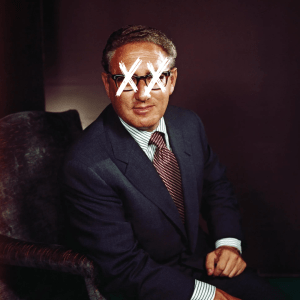
On Nov. 29, former Secretary of State of the United States, Henry Kissinger passed away in his home in Connecticut at the age of 100. News of his demise has elicited repudiation of his legacy and cultural standing, not least from those peoples who suffered the most under his active and hawkish imperialist program. At the same time, world leaders, including Xi Jinping, Vladimir Putin and Benjamin Netanyahu, mourned the loss of a “farsighted statesman,” as Putin described him. Celebrating a much overdue passing of an infamous international criminal will of course be met with reproach from the media of the liberal bourgeoisie in the US and abroad. It is incumbent on Marxist-Leninists, progressives, and revolutionaries to truly grasp what Kissinger’s passing reveals about today’s global imperialism.
First, a few words on Kissinger’s upbringing and a concrete focus on the long trails of blood that follow his lowering coffin.
Kissinger was born in Bavaria in 1923, and he and his family experienced mounting discrimination during the rise of the fascist Third Reich before fleeing to the US as Jewish refugees in 1938. In WWII, he enlisted in the US Army and notably was tasked with denazification in the region of Hesse-Kassel. The “pragmatic” American approach to denazification, such as giving employment to leading Nazis, was in stark contrast to the Soviet approach of giving them gallows. This would have inspired at least part of the young Kissinger’s devotion to “realpolitik.”
While attending college, Kissinger developed a fantasy of becoming a spy for the FBI in the post-war era of McCarthyism. He graduated from Harvard in 1951 with a Doctorate in philosophy. After some time working for various firms, Kissinger became the foreign policy advisor for several Republican campaigns for the US Presidency before landing on the winning ticket of Richard Nixon’s 1969 election. Kissinger filled roles such as National Security Advisor and finally Secretary of State, where his thinking was forged in the fires of the Cold War. Here began his most nefarious tasks for US imperialism.
During the Vietnam War, Kissinger worked hard to not surrender any concessions to the North Vietnamese at the Paris Peace Accords. He bemoaned and attempted to suppress the leaks of the Pentagon Papers, which detailed the horrific extent of American bombing campaigns into Vietnam, Laos, and Cambodia. Kissinger became an ardent supporter of Nixon’s expansion of the Vietnam War into Cambodia, and he famously helped to orchestrate the cooling of relations with the People’s Republic of China, pledging to withdraw American troops and fleets from Taiwan thereby ending the Straits conflict.
This détente also turned a blind eye to the nuclear weapons program developed by China as well as the expansion of its sphere of influence across Asia, including Pakistan. Regarding Pakistan, the Nixon Administration supported the reactionary dictator, General Yahya Khan, in his genocidal war into Bangladesh. Kissinger joked of “those who bleed for dead Bengalis” as criticism rose of US support for the vicious and unnecessary war in Southeast Asia. Opposing the Soviet Union, in 1979 Kissinger sponsored the talks of the SALT I nuclear agreement which forced the social-imperialist Soviet Union down the rabbit hole of hopelessly competing in a nuclear arms race skewed against it. That aided the economic degeneration of the Soviet Union and its dissolution in 1991.
Regarding Europe, Kissinger fostered more active trade and commerce with the European Economic Community (EEC) to bolster economic stimulus and globalization with the US in a dominant monopoly. The Nixon Administration induced the fascist Estado Novo regime in Portugal to supply arms to Israel in its plunderous Yom Kippur War. Kissinger expressed fear over the fall of this regime in 1974, that the fall of the Portuguese Empire might spur on communist-backed national liberation movements in Angola and Mozambique. Kissinger also maintained strong relationships with the fascist regime of Spain under both Francisco Franco and King Juan Carlos I. He authorized the military junta of Greece, ignoring the coup in Cyprus that led to the Turkish invasion in 1974. That destabilized the region and led to the death, abuse, and displacement of thousands of Turkish and Greek Cypriots. Kissinger was also an organizer and proponent of the anti-communist Operation Gladio in Italy. This militant fascist group enlisted the Mafia to pursue the “strategy of tension,” a series of assassinations and bombings to terrorize the Italian masses into apathy, emigration, or acts of self-destructive adventurism.
The portfolio of Kissinger is exhaustive, but no analysis of the damage wrought under his supervision to peace, democracy, and the revolution is complete without a dive into his championing of Operation Condor, the active American intervention into Latin American politics. This was designed to suppress even the most conciliatory and meek of social-democratic governments in the region. Under this plan, Kissinger and the Nixon Administration worked quickly first to sanction Chile under President Salvador Allende, and then coordinated the fascist junta takeover of Augusto Pinochet, who executed and tortured tens of thousands of Chilean workers, students, and peasants, and forced 200,000 people out of the country. Another junta was established in Argentina in 1976 where Kissinger green-lit 400 secret camps from which the military launched the Dirty War against the Argentine working masses, with executions, torture, and disappearances. As many as 30,000 Argentines were killed, tortured, or are missing to this day. In response to Cuban support for the Angolan War of Independence, Kissinger even entertained the idea of bombing Cuba to force it out of the national liberation struggles in Africa. To push the balance of the nuclear arms race further to the US-dominated imperialist bloc, Kissinger approved the plans of Brazil (under yet another reactionary military junta) to develop its nuclear weapons program.
Many critics have called for the prosecution of Kissinger for war crimes and political repression. Spanish judge Baltasar Garzon even attempted to call Kissinger as a witness into the US’ role in Operation Condor. But, incredibly, Kissinger was instead given the Nobel Peace Prize in 1973. Following the defeat of Gerald Ford in the 1976 Presidential election, Kissinger’s political career officially ended, although he was still consulted on various international crises. In Nov. 2002, he was appointed by President George W. Bush to chair the newly established National Commission on Terrorist Attacks Upon the United States to investigate the Sept. 11 attacks. When queried about potential conflicts of interest, Kissinger stepped down as chairman just one month later, rather than reveal his business client list. He was also revealed to have been paid $5 million for advising the Rio Tinto mining corporation on how best to distance itself from an employee who had been arrested for bribery in China, ever the friend to capitalist malfeasance and atrocity.
Kissinger’s peaceful death in his own home at a ripe old age and in great wealth reveals the inherent injustice of the capitalist system, not just of one country but the world over. Such people as Kissinger escape absolutely any repercussions whatsoever for playing leading roles in incalculable crimes against humanity. Instead they are rewarded and praised by the media and the bourgeoisie. Like Kissinger, a number of reactionary spearheads – such as Khan, Videla, Pinochet, Franco, Indira Gandhi, and Margaret Thatcher – all escaped any meaningful punishment. This is absolutely unacceptable in light of the nameless, faceless millions who have suffered beyond comprehension at their hands.
The revolution is essential so that there will be no more Kissingers!
Categories: History, U.S. News
 In memory of Chip Berlet (1949—2026), lifelong anti-fascist fighter
  Jesse Jackson: A man out of history returns home
  1933: A fateful year in the working-class movement of Puerto Rico
  Indigenous resistance to ICE, a new front in an old war
  The Red Phoenix