
By Leonard Zorfass, Red Phoenix correspondent, New Jersey.
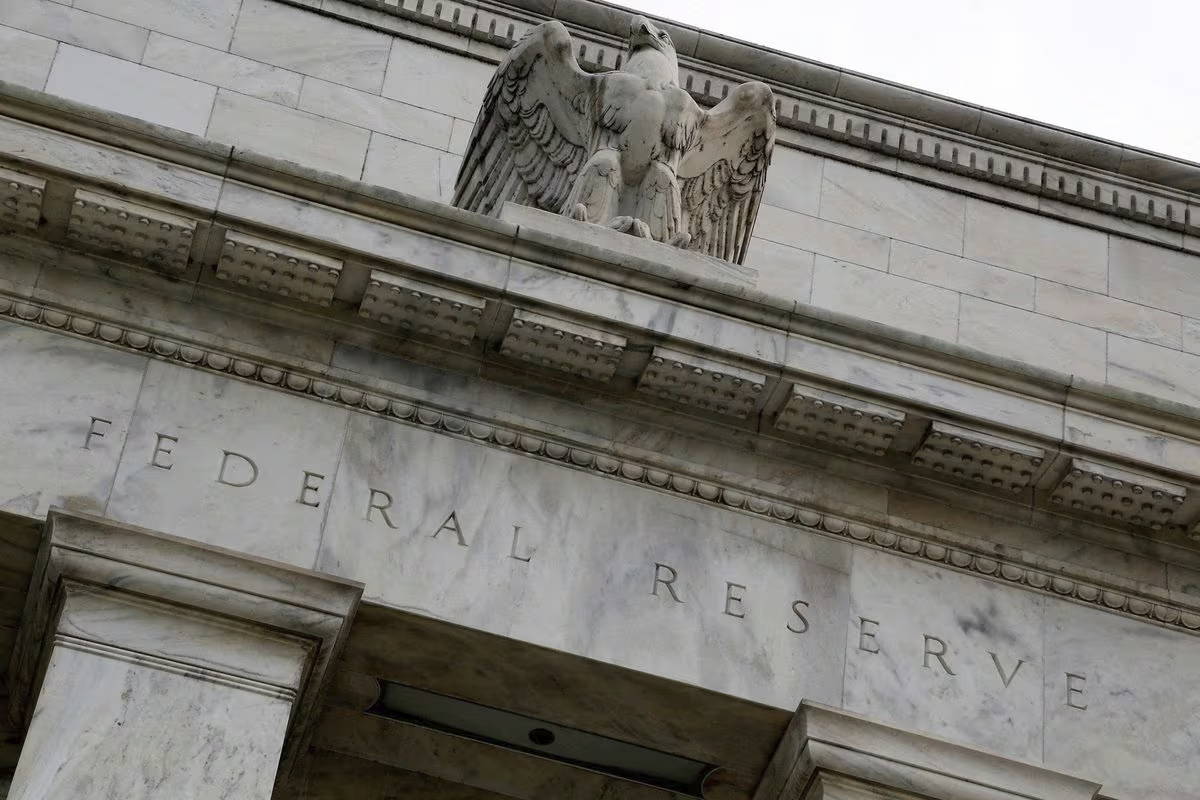
Without a curtain to hide behind, or significant opposition to fear, the capitalist system finds itself grappling with soaring inflation even as the economy experiences relentless growth — including the job market, which boasts 33 consecutive months of expansion. Yet, paradoxically to “classical” bourgeois understanding, the Federal Reserve aggressively raises interest rates at a pace not witnessed in decades.
Following a two-day policy meeting, central bankers are confronted with the disarrayed tableau, inadvertent and open exposure of the perils inherent in unchecked economic growth. The prevailing consensus suggests that the Fed’s leaders will maintain the current interest rates, or they might even conclude the incessant rate hikes or in the face of such growth, even lower interest rates. However, behind the closed doors of ornate boardrooms, a crucial Fed committee engages in highly technical debates, seeking to decipher the uncertain trajectory of the capitalist economy and navigate the treacherous waters of monetary policy.
The Federal Reserve has been ensnared in a convoluted labyrinth of data ever since the pandemic unleashed its destructive force upon the economy more than three years ago. Ruling elites grapple with the enigma of why critical economic engines, such as consumer spending, job market dynamics, and overall growth, display minimal response to the aggressive escalation of interest rates, defying the simplistic dictates of mainstream Economics 101.
Just a year ago, a substantial majority of economists were steadfast that the nation was teetering on the precipice of a recession due to the Fed’s breakneck pace of interest rate hikes. In stark contrast to these projections, recent data reveals a fifth consecutive quarter of growth, with the economy expanding at an annualized rate of 4.9 percent from July to September, marking the most robust growth since 2021.
Moreover, policymakers foresaw a retrenchment in household and family spending, anticipating that individuals would buckle under the weight of skyrocketing prices for essential commodities such as groceries and fuel. However, consumers have repeatedly defied these expectations, shrugging off inflation and the higher interest rates, trapped in a cycle of commodity fetishism and consumer culture. Retail sales in September surged by 0.7 percent compared to the previous month, exceeding expectations by a significant margin.
Despite signs of cooling in the job market, characterized by fewer job openings and subdued (nominal) wage growth compared to the early stages of the pandemic, there has been no trace of massive layoffs or a surge in unemployment.
Fed officials thus attempt to confront the confounding riddle of these paradoxical economic trends of the market.
Nonetheless, for the Federal Reserve, interest rates serve as the primary tool for combating inflation and steering the capitalist system toward what they perceive as a more “sustainable” path. The Fed’s benchmark rate, known as the federal funds rate, currently ranges between 5.25 and 5.5 percent, the highest level in 22 years. Central bankers have left the door ajar for another quarter-point rate increase, possibly at their final meeting of the year in December. Observers are wagering that the central bank will conclude its rate hikes and opt to maintain elevated borrowing costs until inflation retreats to 2 percent. (According to the Fed’s preferred metric, inflation currently stands at 3.4 percent, a marked decline from its zenith of 7 percent in June 2022.)
This situation, paradoxically, raises questions that bourgeois economists cannot answer. On one hand, officials have long advocated that workers, employers, and the capitalist system must endure a “period of pain” until the Fed conquers inflation. On the other hand, officials and observers are now entertaining doubts about whether the economy will react to elevated interest rates as predicted by mainstream economic models: subpar growth, a weakened job market, or a decrease in spending.
In a recent speech, Chicago Fed President Austan Goolsbee issued a caution about “excessive faith” in the purported trade-offs between inflation and the job market. He suggested that the Fed has a unique opportunity to quell inflation without causing damage to the capitalist system, a feat that could be subject to scrutiny for years to come, regardless of the final outcome.
The precise implications for monetary policy may remain uncertain for some time. In the immediate future, Fed officials have asserted that they will decide on interest rates in a meeting-by-meeting fashion, contingent upon the unfolding data regarding inflation, jobs, wages, and economic growth. When we take a step back, central bankers still harbor doubts about the extent to which the economy may decelerate in response to their sweeping measures over the past 19 months.
It may take even more time to discern how, or if, the Fed can contain an economy hurtling forward at a breakneck pace.
Categories: Economy, U.S. News
 Businesses hike prices amid imperialist trade wars, economic volatility
  Trump regime aids corporations via tax dodges, gambling the future of U.S.
  U.S. ditches 66 global bodies to unleash unilateral domination
  Twin Cities general strike, coordinated actions demonstrate resolve of the people
  The Red Phoenix