
By the Party of Labor of Iran (Toufan).
The ideology of the communists is “socialism,” and the ideology of the bourgeoisie is “liberalism.” The two social classes, proletariat and bourgeoisie, look at all developments from these two perspectives. “Liberalism,” like any other phenomenon, has a historical background. It was formed about 300 years ago in the 17th century to combat tyranny and to oppose the oppression of the masses and minority groups.
As a theory against the violation of human rights and paying attention to the rule of law against the autocracy of the church and the kings of the time, “Liberalism” played a progressive role in human developments and raising the level of people’s awareness. “Liberalism” stood up to support the freedom of individuals and minorities to rule over their own destiny. It provided the basis for the development and growth of repressed human talents, who were limited by the belief that everything was due to God. Sciences evolved and had a significant impact on people’s lives. So “Liberalism” is one of the most influential political ideologies of the modern era. With its roots in the Enlightenment and with a strong tradition of defending individual freedoms and the rule of law and the market economy, “Liberalism” has had a significant impact on the formation of modern societies. It has contributed to the emergence of bourgeois democracies and constitutional governments, a state in which individual freedoms are protected and, to some extent, political power is controlled by parliaments.
Liberals argue that everyone has the right to individual freedom as long as they do not restrict the freedoms of others. This individual freedom includes freedom of speech, freedom of religion, and economic freedom. Economically, market laws also play a major role in liberalism. Liberals usually support a “free-market economy” in which the principle of “supply and demand” determines the price of goods. They say that competition leads to the production of the best products and services. They hail the free market as an engine for economic progress and personal development. Liberal theoreticians emphasize the value of free competition and the free market. They state that this competition will lead to the prosperity and development of a society. In addition, “Liberalism” claims to strive for social justice and equal opportunities. In the era of globalization of capital, we see the obvious bankruptcy of “Liberalism” and its failure to fulfill its promises. “Liberalism,” which today in the form of neoliberal policy has become a tool for looting and oppressing people, tries to promote the idea of free trade and economic globalization. It argues that the free exchange of goods, services, and ideas increases the welfare for all and promotes peace among nations. International organizations such as the United Nations, the World Bank, and the World Trade Organization are based on liberal principles. They claim to strive for cooperation among nations. Of course, one cannot fill people’s bellies or run the country solely based on claims. Naturally, “Liberalism” is a good tool for the continuation of life for the class that has all the wealth. The rule of law means something different to a wealthy or prosperous person than to someone who goes to bed hungry at night. As a result of the rule of law, the rich rule over the poor and consequently must defend their own selfish and class interests.
Adam Smith, in explaining “individual liberty,” believed that every person is free to increase their welfare. But what is the reality? No poor child is born with a free ticket out of poverty. The statement “money makes money” is invalid for the majority and valid only for the minority who have wealth and who own the means of production. Adam Smith pictures the faces of the people who are “inherently selfish and profit-seeking” and extends it to the whole society, regardless of the fact that they are the product of a competitive capitalist society. Adam Smith does not promote the idea that a person must put his individual interest below the collective interests of the society. According to Smith:
“It is not from the benevolence of the butcher, the brewer, or the baker, that we expect our dinner, but from their regard to their own interest. We address ourselves, not to their humanity but to their self-love, and never talk to them of our own necessities but of their advantages.”
But these butchers and bakers were born and raised in a society that their ancestors built and provided them with all the social wealth that they also enjoy. These butchers and bakers are not born in a cave or in a forest. They work at a certain level of development and progress, which is the historical achievement of the community and of past generations. Therefore, they are responsible to the community.
In his book On Liberty, John Stuart Mill observes, “The only freedom which deserves the name is that of pursuing our own good in our own way, so long as we do not attempt to deprive others of theirs or impede their efforts to obtain it.”
He believed that the limit of each person’s freedom is the inviolability of another person’s freedom. For this reason, he agreed with the freedom of hungry people to protest for bread in front of a bakery, provided that they do not attack the bakery shop to seize bread and not violate the baker’s freedom. Apparently, a hungry stomach should have faith and decency and recognize this type of rule of law.
Anatole France quipped that “a rich person is as free to spend the night under the bridge as a poor person.”
So we see how this theory of “Liberalism,” which initially played a progressive historical role in society, faced reality in front of the barrier of the class struggle. In reality, “Liberalism” agreed only with the rule of law, with individual freedom, and with market competition for its own benefit. The issue of emancipation of nations was left out of the agenda of “Liberalism” as long as they threatened the interests of democratic constitutional governments in Europe. The liberals, who talked about “individual freedom,” “equal opportunities,” “rule of law,” “free competition,” etc., did not intend to apply these luxuries to everyone. They wanted democracy to divide the spoils among themselves only at the top of the socio-economic hierarchy. The “Chartists” movement, the first labor movement in the world against this bourgeois liberalism, presented its six demands under the title of the People’s Charter in July 1839 to the House of Commons for approval. The demands included:
1. A vote for every man aged twenty-one years and above, of sound mind, and not undergoing punishment for a crime;
2. No property qualification for Members of Parliament;
3. Annual parliamentary elections.
As we see, it was about a century later that workers and the poor without private property were still deprived of the individual freedom of the right to vote. “Liberalism” defended individual freedom for people, but the ideology did not apply for half of the world’s population, namely women. “Liberalism” feared that women, who were poor and hungry and close to the working class, having the right to vote would upset the game of democracy. The Great October Revolution gave all Soviet women the right to vote. It was then that women around the world forced a retreat on the bourgeoisie and its liberalism and gradually began to enjoy their right to vote.
The victorious socialism in USSR challenged “Liberalism” and its many promises and deceptions. Attention should be paid to the following data:
Britain recognized women’s suffrage in 1918, but only for women 30 years old or older. For men, this age limit was 20 years. In 1921, about one third of British women participated in national elections for the first time; Canada recognized the right of women to vote in 1917; Germany, Poland, Australia in 1918; United States of America in 1920; Sweden 1921; Ireland 1928; Spain 1931; France 1944; Italy 1945; Argentina, Japan, Mexico, Pakistan 1947; India, the largest democracy in the world in 1950, and in Switzerland, women also got the right to vote after a referendum in 1971.
Comparing the promises “Liberalism” gave to the people of the world 300 years ago to these historical facts illustrates the falsity of its claims. During this time, they controlled the rule of law in Europe and brought the nations of three continents under the wheel of colonialism. Their free competition was the freedom to enslave other people and annex their lands, which was in stark and hypocritical contrast to the classical thought of “Liberalism.”
The passage of several centuries shows that “Liberalism” was only able to talk about individual freedom and the freedom of nations until the beginning of the European colonial system. After that, there was no sign of individual freedom nor of national freedom and liberation.
With the implementation of “Liberalism,” we see that when individual freedom becomes an absolute priority, it only leads to ignoring the needs and rights of large social strata, the strata that contributes to the national wealth of the country but without getting its share. Therefore, valuing individual freedom should be accompanied by a sense of social responsibility to reduce social inequalities and promote the common well-being of the masses, which liberalism stamps as “beggar breeding” and “encouraging and persuading laziness, lagging, and social scum.” In reality, liberalism propagates racial supremacy and fascism. The reality of the development of capitalism showed that liberal capitalism was able to concentrate power and wealth in the hands of a few, while the majority of people live in poverty and insecurity in these countries.
The free competition advocated by “Liberalism” also quickly led to the emergence of monopolies by controlling and supervising the markets and by the purchase of raw materials in the world. By being present in the stock markets and setting a non-competitive and exclusive price, the theoreticians of liberalism imposed the price of everything to the people of the world. With this policy, liberalism not only does not provide an opportunity, but it also encourages the unequal distribution of resources.
The idea of making the rule of the market absolute on the basis of “maximizing profit” surrenders the fate of humanity to the blind activities of the market. The sanctity of “private ownership of the means of production” leads to ignoring other areas of social activities. These include environmental protection, education, and public health, development and strengthening of the arts, public tours and entertainment, social justice, cultural diversity, etc. The claim about free competition in the era of imperialism is a farce. Free competition was intended to make the majority of countries weak, destroy national identities, and allow for imperialist plundering.
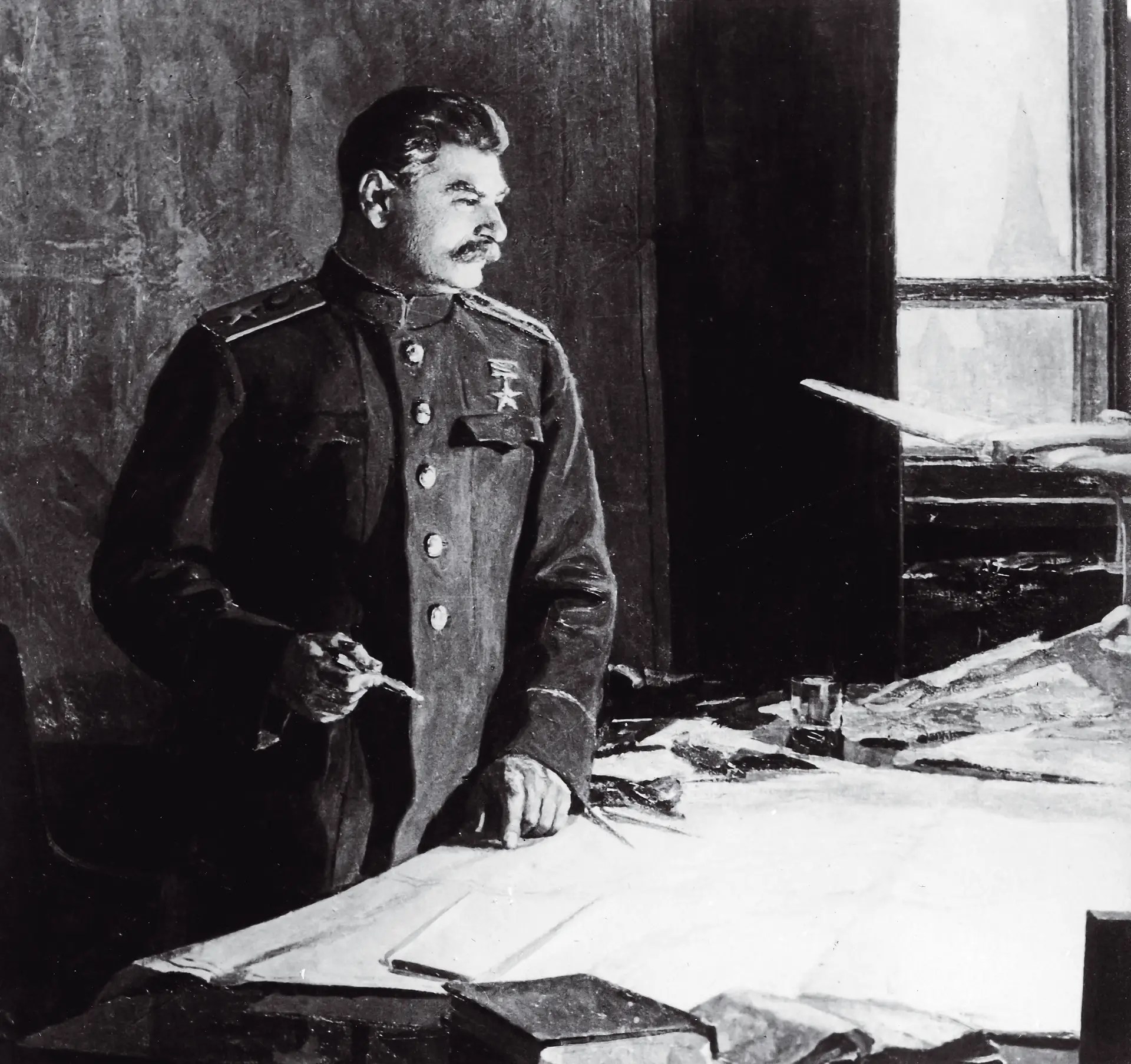
The policy of the World Bank, the International Monetary Fund, and the World Trade Organization, which is modern neoliberalism, is in complete contradiction with the basic ideas of the founders of the classical theory of “Liberalism.” These three colonial tools are only for enslaving nations. We are facing a different situation today. Let us see the words of Comrade Stalin on this.
Earlier, the bourgeoisie presented themselves as liberal, they were for bourgeois democratic freedom and in that way gained popularity with the people. Now there is not one remaining trace of liberalism. There is no such thing as ‘freedom of personality’ any more – personal rights are now only acknowledged by them, the owners of capital – all the other citizens are regarded as raw materials, that are only for exploitation. The principle of equal rights for people and nations is trodden in the dust and it is replaced by the principle of full rights for the exploiting minority and the lack of rights of the exploited majority of the citizens. The banner of bourgeois democratic freedom has been flung overboard. I think that you, the representatives of communist and democratic parties must pick up this banner and carry it forward if you want to gain the majority of the people. There is nobody else to raise it.
Earlier, the bourgeoisie, as the heads of nations, were for the rights and independence of nations and put that ‘above all.’ Now there is no trace left of this ‘national principle.’ Now the bourgeoisie sell the rights and independence of their nations for dollars. The banner of national independence and national sovereignty has been thrown overboard. Without doubt, you, the representatives of the communist and democratic parties must raise this banner and carry it forward if you want to be patriots of your countries, if you want to be the leading powers of the nations. There is nobody else to raise it.
That is how matters stand at present.
J. V. Stalin, Speech of the 19th Party Congress of the Communist Party of the Soviet Union, Oct. 14, 1952.
Today, it is the duty of the communists to defend the right of nations to self-determination, to defend the struggles of nations against colonialism and imperialism, and to support the struggles of the peoples and the working class for liberation. Communists strongly oppose the right of individuals, companies and countries to be free to massacre, bomb, carry out aggression against countries, and occupy other people’s lands such as Palestine. This “liberalism” must be eradicated along with its supporters.
The Party of Labor of Iran (Toufan)

Categories: Imperialism, Theory
 Changes in forms of imperialism over stages of capitalist development
  Inflation and recession, the cyclical crisis of capitalism
  Lenin: “Letter to American Workers.”
  Statement of the 24th Plenary of the International Conference of Marxist-Leninist Parties and Organizations
  The Red Phoenix